Table of Content
Title
Connect with
us to begin your healing journey today.
Experience holistic healing that restores balance and vitality.
Natural Remedies for Diverticulitis Flare-Ups
Natural Remedies for Diverticulitis Flare-Ups
Natural Remedies for Diverticulitis Flare-Ups
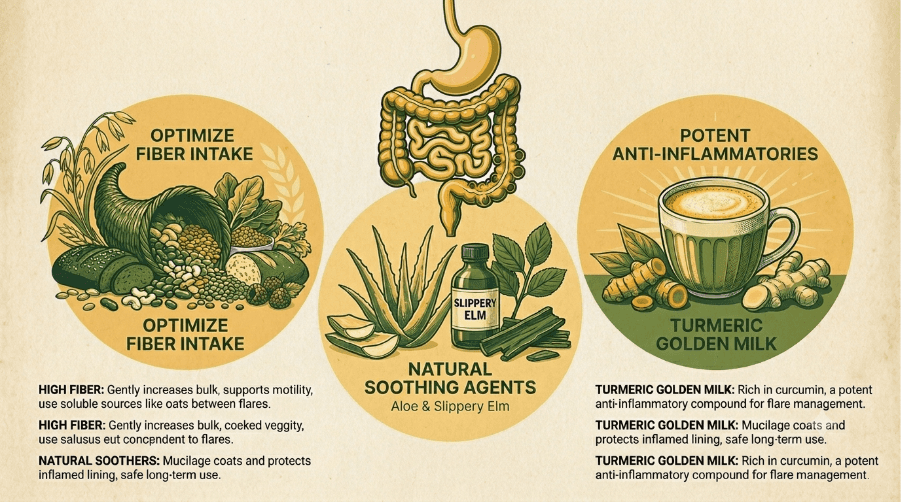
Diverticulitis flare-ups can be soothed naturally by resting your colon with bone broth, pureed foods, and anti-inflammatory herbs like turmeric and aloe vera. Between flares, a high-fiber diet, daily hydration, and stress management are the most powerful long-term strategies to prevent recurrence. Working with a naturopathic or functional medicine practitioner can help you identify your personal triggers and build a lasting gut-healing plan.
Natural Remedies for Diverticulitis - What Your Gut Is Really Asking For
You're going about your day when a sharp, cramping pain hits your lower left abdomen. Bloating follows. Maybe nausea. If this sounds familiar, your digestive system might be sending you an urgent signal and it's worth listening.
Diverticulitis is one of the most common yet frequently misunderstood digestive conditions in adults over 40. The good news? Your body has a remarkable capacity to heal when you give it the right tools. Whether you're navigating a flare-up or trying to prevent the next one, understanding natural remedies for diverticulitis can be genuinely life changing.
At the Center for Natural Medicine, our practitioners take a whole-person approach to digestive health because the gut is never just the gut.
What Is Diverticulitis and Why Does It Keep Coming Back?
Diverticulitis occurs when small pouches called diverticula which can form in the walls of your colon become inflamed or infected. It often develops silently over years before a flare brings it to your attention.
The typical triggers? A low-fiber diet, chronic dehydration, prolonged stress, and a disrupted gut microbiome. If you've been wondering why you keep ignoring your gut feelings, this might be the wake-up call your digestive tract has been sending.
Understanding what's happening beneath the surface is the first step toward healing. As explored in our blog on when digestive tests are normal, conventional testing often misses the deeper microbial and inflammatory imbalances that drive recurrent flares.
Natural Remedies for Diverticulitis: A Holistic Healing Toolkit
The body's digestive system is exquisitely responsive to natural interventions especially when approached consistently and with intention.

Fiber: The Foundation of Colon Health
Most people with diverticulitis are chronically under-consuming fiber. During an active flare, a low-residue or liquid diet may be necessary to let the bowel rest. But between flares, gradually increasing soluble fiber think oats, cooked vegetables, flaxseed, and legumes is one of the most evidence-aligned strategies available.
Aim for 25–35 grams of fiber per day once your gut has calmed down, increasing slowly to avoid excess gas.
Pro Tip: Add 1 tablespoon of ground flaxseed to your morning smoothie or yogurt. It's gentle on the gut, anti-inflammatory, and rich in mucilaginous fiber that coats and soothes the intestinal wall.
Aloe Vera & Slippery Elm: Nature's Gut Soothers
Two herbs with centuries of traditional use stand out for their ability to calm gut inflammation:
Aloe Vera Juice (inner leaf, preservative-free) acts as a natural anti-inflammatory coating for the digestive lining. A small glass before meals during a mild flare can ease discomfort noticeably for many people.
Slippery Elm Bark forms a gel-like substance when mixed with water, creating a soothing barrier along the intestinal wall. Naturopathic practitioners at our naturopathic care center frequently recommend it as part of a gut-healing protocol.
Home Remedies for Diverticulitis Flare-Ups: Calming the Acute Storm
When a flare strikes, the goal shifts: reduce inflammation, rest the colon, and protect the microbiome.
The BRAT-Plus Approach and Natural Remedies for Diverticulitis Flare-Ups
During acute episodes, gentle, easily digestible foods are your best allies. Think beyond the classic BRAT diet (bananas, rice, applesauce, toast) with a naturopathic upgrade:
Bone broth - Rich in collagen and glutamine, it helps repair the gut lining
Cooked, pureed vegetables - Easier to digest than raw, with retained nutrients
Probiotic-rich foods - Plain unsweetened yogurt or kefir (once acute pain eases) to begin restoring bacterial balance
Turmeric golden milk - Curcumin is one of the most studied natural anti-inflammatories available
Example: One of our patients with recurring diverticulitis flares incorporated a daily turmeric and ginger tea alongside a temporary low-fiber protocol during flares, then transitioned to a high-fiber whole foods diet between episodes. Within 90 days, her flare frequency dropped significantly, and her GI doctor was pleasantly surprised.
Our blog on the physiological effects of stress on the GI tract explains exactly why stress management must be paired with dietary shifts. Stress doesn't just live in the mind it reshapes the gut environment.
Hydration, Movement, and the Gut-Brain Axis
Dehydration is one of the most underestimated contributors to diverticulitis. Hard stools put enormous pressure on colonic pouches, increasing the risk of inflammation. Drinking 8–10 glasses of filtered water daily isn't optional it's therapeutic.
Gentle movement, like slow walking or restorative yoga, also supports healthy bowel motility. For a deeper dive into how movement heals, visit our post on the power of movement for better health.
And don't underestimate the role of colonic hydrotherapy in supporting gut restoration particularly for individuals dealing with chronic constipation or bowel stagnation between flares.
When Natural Isn't Enough Alone: Knowing When to Seek Support
Pro Tip: If you experience fever above 101°F, severe abdominal pain, rectal bleeding, or symptoms that worsen over 48 hours, seek medical attention immediately. Natural remedies complement medical care they don't replace it in emergencies.
For a truly individualized approach, connecting with a functional medicine coach or naturopathic practitioner can help you identify your personal triggers whether they're dietary, hormonal, or stress related. Our food sensitivity testing services can also uncover hidden inflammatory foods that may be silently driving recurrent flares.
Conclusion: Your Gut Deserves a Holistic Conversation
Diverticulitis isn't just a colon problem it's a whole-body conversation about how you've been living, eating, and managing stress. The most powerful shift you can make isn't a single supplement or diet change; it's deciding to listen to what your digestive system has been trying to tell you.
Natural remedies for diverticulitis and home remedies for diverticulitis flare-ups can be transformative when guided by the right support system. Whether you're exploring naturopathic care, acupuncture, or personalized health coaching, the Center for Natural Medicine is here to walk with you toward lasting gut health.
Ready to take the next step? Explore our services or contact our team to book a consultation today.
FAQ's
Q 1: What are the most effective natural remedies for diverticulitis?
The most effective natural remedies include a high-fiber diet (between flares), slippery elm bark, aloe vera juice, turmeric, probiotics, and staying well-hydrated with 8–10 glasses of water daily.
Q 2: What are the best home remedies for diverticulitis flare-ups?
During a flare-up, rest your colon with bone broth, pureed vegetables, and plain probiotic foods. Avoid raw fiber temporarily, stay hydrated, and use turmeric or ginger to reduce inflammation naturally.
Q 3: Can diverticulitis be managed long-term with natural remedies alone?
In many cases, yes long-term lifestyle changes including a high-fiber diet, hydration, stress reduction, and gut-healing herbs can significantly reduce flare frequency. However, severe or complicated cases always require medical supervision.
Q 4: Is fiber safe to eat during a diverticulitis flare-up?
No, during an active flare, a low-fiber or liquid diet is recommended to rest the colon. High-fiber foods should be reintroduced gradually only after the acute symptoms have resolved.
Q 5: How does stress contribute to diverticulitis, and can managing it help?
Chronic stress disrupts gut motility, alters the microbiome, and triggers inflammation all of which can directly cause or worsen diverticulitis flares. Stress management is a non-negotiable part of any natural healing plan.
Diverticulitis flare-ups can be soothed naturally by resting your colon with bone broth, pureed foods, and anti-inflammatory herbs like turmeric and aloe vera. Between flares, a high-fiber diet, daily hydration, and stress management are the most powerful long-term strategies to prevent recurrence. Working with a naturopathic or functional medicine practitioner can help you identify your personal triggers and build a lasting gut-healing plan.
Natural Remedies for Diverticulitis - What Your Gut Is Really Asking For
You're going about your day when a sharp, cramping pain hits your lower left abdomen. Bloating follows. Maybe nausea. If this sounds familiar, your digestive system might be sending you an urgent signal and it's worth listening.
Diverticulitis is one of the most common yet frequently misunderstood digestive conditions in adults over 40. The good news? Your body has a remarkable capacity to heal when you give it the right tools. Whether you're navigating a flare-up or trying to prevent the next one, understanding natural remedies for diverticulitis can be genuinely life changing.
At the Center for Natural Medicine, our practitioners take a whole-person approach to digestive health because the gut is never just the gut.
What Is Diverticulitis and Why Does It Keep Coming Back?
Diverticulitis occurs when small pouches called diverticula which can form in the walls of your colon become inflamed or infected. It often develops silently over years before a flare brings it to your attention.
The typical triggers? A low-fiber diet, chronic dehydration, prolonged stress, and a disrupted gut microbiome. If you've been wondering why you keep ignoring your gut feelings, this might be the wake-up call your digestive tract has been sending.
Understanding what's happening beneath the surface is the first step toward healing. As explored in our blog on when digestive tests are normal, conventional testing often misses the deeper microbial and inflammatory imbalances that drive recurrent flares.
Natural Remedies for Diverticulitis: A Holistic Healing Toolkit
The body's digestive system is exquisitely responsive to natural interventions especially when approached consistently and with intention.
Fiber: The Foundation of Colon Health
Most people with diverticulitis are chronically under-consuming fiber. During an active flare, a low-residue or liquid diet may be necessary to let the bowel rest. But between flares, gradually increasing soluble fiber think oats, cooked vegetables, flaxseed, and legumes is one of the most evidence-aligned strategies available.
Aim for 25–35 grams of fiber per day once your gut has calmed down, increasing slowly to avoid excess gas.
Pro Tip: Add 1 tablespoon of ground flaxseed to your morning smoothie or yogurt. It's gentle on the gut, anti-inflammatory, and rich in mucilaginous fiber that coats and soothes the intestinal wall.
Aloe Vera & Slippery Elm: Nature's Gut Soothers
Two herbs with centuries of traditional use stand out for their ability to calm gut inflammation:
Aloe Vera Juice (inner leaf, preservative-free) acts as a natural anti-inflammatory coating for the digestive lining. A small glass before meals during a mild flare can ease discomfort noticeably for many people.
Slippery Elm Bark forms a gel-like substance when mixed with water, creating a soothing barrier along the intestinal wall. Naturopathic practitioners at our naturopathic care center frequently recommend it as part of a gut-healing protocol.
Home Remedies for Diverticulitis Flare-Ups: Calming the Acute Storm
When a flare strikes, the goal shifts: reduce inflammation, rest the colon, and protect the microbiome.
The BRAT-Plus Approach and Natural Remedies for Diverticulitis Flare-Ups
During acute episodes, gentle, easily digestible foods are your best allies. Think beyond the classic BRAT diet (bananas, rice, applesauce, toast) with a naturopathic upgrade:
Bone broth - Rich in collagen and glutamine, it helps repair the gut lining
Cooked, pureed vegetables - Easier to digest than raw, with retained nutrients
Probiotic-rich foods - Plain unsweetened yogurt or kefir (once acute pain eases) to begin restoring bacterial balance
Turmeric golden milk - Curcumin is one of the most studied natural anti-inflammatories available
Example: One of our patients with recurring diverticulitis flares incorporated a daily turmeric and ginger tea alongside a temporary low-fiber protocol during flares, then transitioned to a high-fiber whole foods diet between episodes. Within 90 days, her flare frequency dropped significantly, and her GI doctor was pleasantly surprised.
Our blog on the physiological effects of stress on the GI tract explains exactly why stress management must be paired with dietary shifts. Stress doesn't just live in the mind it reshapes the gut environment.
Hydration, Movement, and the Gut-Brain Axis
Dehydration is one of the most underestimated contributors to diverticulitis. Hard stools put enormous pressure on colonic pouches, increasing the risk of inflammation. Drinking 8–10 glasses of filtered water daily isn't optional it's therapeutic.
Gentle movement, like slow walking or restorative yoga, also supports healthy bowel motility. For a deeper dive into how movement heals, visit our post on the power of movement for better health.
And don't underestimate the role of colonic hydrotherapy in supporting gut restoration particularly for individuals dealing with chronic constipation or bowel stagnation between flares.
When Natural Isn't Enough Alone: Knowing When to Seek Support
Pro Tip: If you experience fever above 101°F, severe abdominal pain, rectal bleeding, or symptoms that worsen over 48 hours, seek medical attention immediately. Natural remedies complement medical care they don't replace it in emergencies.
For a truly individualized approach, connecting with a functional medicine coach or naturopathic practitioner can help you identify your personal triggers whether they're dietary, hormonal, or stress related. Our food sensitivity testing services can also uncover hidden inflammatory foods that may be silently driving recurrent flares.
Conclusion: Your Gut Deserves a Holistic Conversation
Diverticulitis isn't just a colon problem it's a whole-body conversation about how you've been living, eating, and managing stress. The most powerful shift you can make isn't a single supplement or diet change; it's deciding to listen to what your digestive system has been trying to tell you.
Natural remedies for diverticulitis and home remedies for diverticulitis flare-ups can be transformative when guided by the right support system. Whether you're exploring naturopathic care, acupuncture, or personalized health coaching, the Center for Natural Medicine is here to walk with you toward lasting gut health.
Ready to take the next step? Explore our services or contact our team to book a consultation today.
FAQ's
Q 1: What are the most effective natural remedies for diverticulitis?
The most effective natural remedies include a high-fiber diet (between flares), slippery elm bark, aloe vera juice, turmeric, probiotics, and staying well-hydrated with 8–10 glasses of water daily.
Q 2: What are the best home remedies for diverticulitis flare-ups?
During a flare-up, rest your colon with bone broth, pureed vegetables, and plain probiotic foods. Avoid raw fiber temporarily, stay hydrated, and use turmeric or ginger to reduce inflammation naturally.
Q 3: Can diverticulitis be managed long-term with natural remedies alone?
In many cases, yes long-term lifestyle changes including a high-fiber diet, hydration, stress reduction, and gut-healing herbs can significantly reduce flare frequency. However, severe or complicated cases always require medical supervision.
Q 4: Is fiber safe to eat during a diverticulitis flare-up?
No, during an active flare, a low-fiber or liquid diet is recommended to rest the colon. High-fiber foods should be reintroduced gradually only after the acute symptoms have resolved.
Q 5: How does stress contribute to diverticulitis, and can managing it help?
Chronic stress disrupts gut motility, alters the microbiome, and triggers inflammation all of which can directly cause or worsen diverticulitis flares. Stress management is a non-negotiable part of any natural healing plan.
Latest Blogs

What Is Colonic Hydrotherapy? Procedure, Benefits, and Safety
Oct 17, 2026

What Conventional Medicine Gets Right and Functional Medicine Gets Right: A Fair Comparison
Oct 17, 2026

What Is a Holistic Health Practitioner? Roles, Benefits, and What to Expect
Oct 12, 2026

What Is Outpatient Mental Health Therapy? A Clear, Honest Breakdown
Aug 31, 2026

The 90-Day Wall: Why Most Wellness Plans Collapse by Month Three
Aug 6, 2026

Why More People Are Turning to a Functional Medicine Health Coach for Root-Cause Healing
Jul 14, 2026
Connect with us to begin your healing journey today.
Experience holistic healing that restores balance and vitality.
Connect with us to begin
your healing journey today.
Experience holistic healing that restores balance and vitality.
Connect with us to begin
your healing journey today.
Experience holistic healing that restores balance and vitality.
Connect with us to begin
your healing journey today.
Experience holistic healing that restores balance and vitality.
Latest New & Blogs
Related Blog Post
Related Blog Post
Newsletter Signup
Newsletter Signup
Newsletter Signup
Newsletter Signup
Get wellness tips, health insights, and exclusive updates in your inbox.
Get wellness tips, health insights, and exclusive updates in your inbox.
Get wellness tips, health insights, and exclusive updates in your inbox.
Get wellness tips, health insights, and exclusive updates in your inbox.