Table of Content
Title

Connect with
us to begin your healing journey today.
Experience holistic healing that restores balance and vitality.
Eating Closer to Nature: 5 Benefits of Choosing a Whole Foods Diet
Eating Closer to Nature: 5 Benefits of Choosing a Whole Foods Diet
Eating Closer to Nature: 5 Benefits of Choosing a Whole Foods Diet
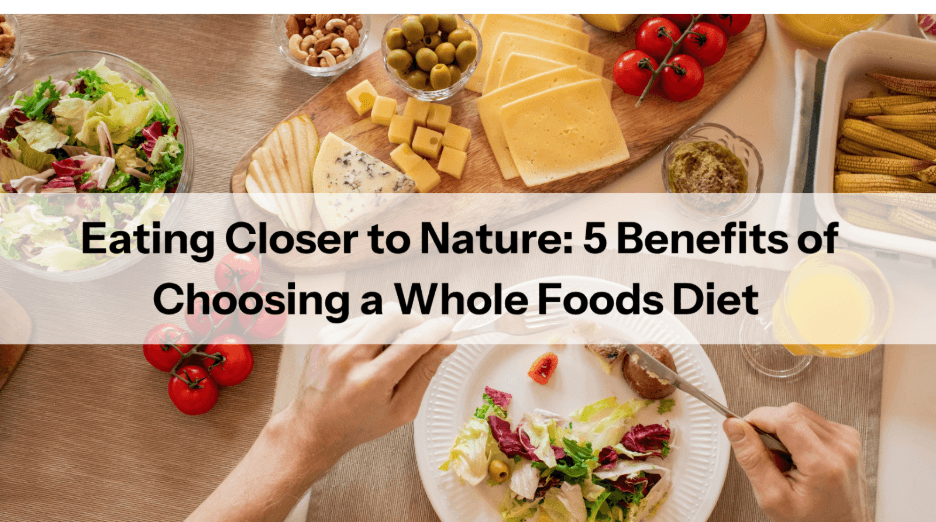
When you think about food that truly nourishes you, what comes to mind? For most of us, it’s not something from a box or drive-through, it’s something fresh, colorful, and real. Maybe it’s a crisp apple, a hearty bowl of soup made from scratch, or a salad bursting with flavor. That’s what eating closer to nature is all about; choosing foods that look much like they did when they came from the earth.
Now, in this fast-paced life we’re all living; convenience foods have slowly taken over. Packages keep showing up promising “healthy,” “low-fat,” or “high-protein,” but underneath all that glossy talk, there are often refined ingredients, sneaky sugars, and additives that our bodies weren’t really built to handle in big amounts.
Going back to food in their natural, or barely processed form is one of the simplest, and honestly most powerful ways to support long-term health and well-being. At the Center for Natural Medicine, nutrition is seen like a solid foundation for overall wellness and natural healing
What Does “Eating Closer to Nature” Mean?
At the core of this approach is choosing foods in their most natural, unrefined state. Think fresh fruits and veggies, legumes, nuts, seeds, whole grains, and better-quality proteins, like fish, eggs, or grass-fed meats. These foods usually don’t require a long ingredient list, because the food is the ingredient
It also includes taking a balanced and realistic mindset. Some “clean eating” folks try to dodge every trace of sugar, sweetener, or additive, but that kind of strictness can backfire. It can create guilt, anxiety, or even lead to disordered patterns. The point isn’t to eat “perfectly clean.” The point is to make nourishing choices most of the time, then leave some space for flexibility, and a little pleasure too. Real health isn’t about tight restriction, it’s about consistency and balance
And many people notice that working with a Functional Medicine Health Coach can help healthy eating feel less like a rulebook, and more like something that fits their actual life.

5 Benefits of Whole, Natural Foods
(1) More nutrients, fewer artificial extras
Whole foods are often packed with vitamins, minerals, antioxidants, and fiber, you know. The whole “fuel and rebuild” combo your body depends on. Processed foods, in contrast, tend to lose a good chunk of that original nutrition during manufacturing, plus they can come with additives you don’t really need. When you pick foods that are nearer to how they started, you give your body what it recognizes and can actually use.
This way of eating also fits the ideas behind Functional Medicine, which tends to look at the real reasons behind long-term health problems, using nutrition and lifestyle support, instead of only masking symptoms.
(2) Steadier energy, smoother metabolism
If you have ever hit a mid- afternoon crash after a sweet snack, that’s basically the “rollercoaster” effect refined foods can bring. Whole foods often help keep energy more level by supporting balanced blood sugar and a metabolism that works more efficiently. Even studies suggest that sticking mostly to whole, unprocessed foods is tied to maintaining a healthy weight, and lowering risk factors for chronic problems like diabetes, heart disease, and some cancers.
And when metabolism gets help from balanced nutrition, some people also notice improved energy, clearer thinking, and a more lively overall vibe.
(3) A friendlygut and easier digestion.
Fiber from fruits, vegetables, and whole grains supports a healthier gut microbiome, the sort of community of helpful bacteria that influences digestion, immunity, and even mood. Fiber can also help you feel satisfied for longer, so portion control becomes more natural, without getting stuck in strict calorie counting.
Good digestion and gut balance are also pretty common focuses in naturopathic care, especially when someone is working toward long-term wellness and immune support.
(4) Ongoing protection, for years not just days.
The “get back to nature” benefits are well described in research: whole-food eating patterns have been associated with better cholesterol levels, stronger heart function, improved metabolic and endocrine balance, and sometimes a reduced reliance on certain medications.
Making gradual, sustainable changes to food choices may also support healthier aging and long-term disease prevention, without extreme, hard-to-maintain routines.
(5) Good for you andtheplanet.
Eating in a way that stays closer to nature can support ecological health too. Choosing more plant-based, whole foods tend to reduce environmental pressure and encourage a more careful, mindful use of resources. It’s kind of like personal wellness and planetary wellness meet in the middle, letting you nourish both body and earth.
Simple Ways to Eat Closer to Nature
Put more color on your plate: the more colorful your food, the more nutrients you’re probably getting.
Grab what’s around the edge of the store: that’s often where the fresh produce is, plus meats, eggs, and dairy too.
Read labels like you mean it: when you pick packaged items, shorter ingredient lists usually point to fewer additives and less added sugar.
Plan a little ahead of time: make a shopping list, prep meals and snacks, and keep nourishing options ready so when you get hungry, you’re less likely to grab convenience foods on impulse.
Begin small and be gentle with yourself: switching toward whole foods takes time. Even swapping out one processed meal per day for something fresh, natural, can be enough to notice changes in your energy and mood.
Little lifestyle tweaks, if you do them regularly, can lead to real long-run improvements in both physical health and emotional steadiness.
How the Center for Natural Medicine Can Help
At the Center for Natural Medicine, we treat food as a cornerstone of healing. Eating nearer to nature doesn’t have to turn into rigid rules, it’s more like are finding how simple, satisfying, and oddly joyful eating can feel. Yet change can feel overwhelming at first, specially when you’re seeing those confusing messages about nutrition everywhere, one after another.
This is where our functional medicine health coach comes in. With personalized sessions, she’ll help you sort out which foods support your specific body, not just generic advice. She’ll also help you shape realistic shopping lists and meal plans, and make whole-food living feel, not forced, but natura and sustainable.
So, are you ready to start eating closer to nature? Just reach out through Center for Natural Medicine contact page to schedule a session with our health coach, and find out how real food can be delicious, energizing, and honestly life changing. When you feed your body what it’s designed for, it usually answers back, with energy, clarity, and vitality from the inside out.
FAQ
(1) What does “eating closer to nature” actually mean, or what are we talking about?
Basically it means picking foods that are pretty natural and as little processed as possible, think fresh fruit, vegetables, whole grains, nuts, seeds, and solid proteins. The vibe is to eat food that still looks kind of like it came straight from the earth instead of, you know , those heavily processed convenience options.
(2) Do I have to completely give up processed foods to eat healthier?
No, not at all. “Eating closer to nature” is more about balance than perfection. Like, tiny changes—cooking more at home or simply adding more whole foods to your plate—can make a real difference over time, without feeling trapped or super restricted.
(3) Can a whole foods way of eating really improve energy levels?
Yeah, for a lot of people, energy feels more even and steady. When you cut back on refined foods and go heavier on nutrient-dense meals, some folks notice they don’t get those sudden crashes. Whole foods can help back up balanced blood sugar, which may make you feel more focused throughout the day.
(4) What are some easy ways to start eating more natural foods?
Keep it simple: add more fruits and vegetables to your meals, check ingredient labels, drink more water, and swap out one processed snack per day for a whole-food alternative like nuts, fruit, or yogurt. Honestly, small and sustainable habits usually work better than big, sudden overhauls.
(5) How can functional medicine support healthy eating habits?
Functional medicine treats nutrition like a bigger part of overall health. A functional medicine health coach can help you figure out which foods actually support your body, create meal plans that feel realistic, and build habits that are practical, not just theory. It’s more like helping you fit it into your real life, not forcing perfection.
References
Harvard Health Publishing. (2018, August 6). “Clean” eating: The good and the bad. Harvard Health. https://www.health.harvard.edu/staying-healthy/clean-eating-the-good-and-the-bad
Medical News Today. (2023, February 3). What is a whole foods diet? https://www.medicalnewstoday.com/articles/whole-food-diet
Turner-McGrievy, G. M., Mandes, T., & Crimarco, A. (2017). A plant-based diet for overweight and obesity prevention and treatment. Nutrition & Diabetes, 7(3), e256. https://doi.org/10.1038/nutd.2017.3
When you think about food that truly nourishes you, what comes to mind? For most of us, it’s not something from a box or drive-through, it’s something fresh, colorful, and real. Maybe it’s a crisp apple, a hearty bowl of soup made from scratch, or a salad bursting with flavor. That’s what eating closer to nature is all about; choosing foods that look much like they did when they came from the earth.
Now, in this fast-paced life we’re all living; convenience foods have slowly taken over. Packages keep showing up promising “healthy,” “low-fat,” or “high-protein,” but underneath all that glossy talk, there are often refined ingredients, sneaky sugars, and additives that our bodies weren’t really built to handle in big amounts.
Going back to food in their natural, or barely processed form is one of the simplest, and honestly most powerful ways to support long-term health and well-being. At the Center for Natural Medicine, nutrition is seen like a solid foundation for overall wellness and natural healing
What Does “Eating Closer to Nature” Mean?
At the core of this approach is choosing foods in their most natural, unrefined state. Think fresh fruits and veggies, legumes, nuts, seeds, whole grains, and better-quality proteins, like fish, eggs, or grass-fed meats. These foods usually don’t require a long ingredient list, because the food is the ingredient
It also includes taking a balanced and realistic mindset. Some “clean eating” folks try to dodge every trace of sugar, sweetener, or additive, but that kind of strictness can backfire. It can create guilt, anxiety, or even lead to disordered patterns. The point isn’t to eat “perfectly clean.” The point is to make nourishing choices most of the time, then leave some space for flexibility, and a little pleasure too. Real health isn’t about tight restriction, it’s about consistency and balance
And many people notice that working with a Functional Medicine Health Coach can help healthy eating feel less like a rulebook, and more like something that fits their actual life.
5 Benefits of Whole, Natural Foods
(1) More nutrients, fewer artificial extras
Whole foods are often packed with vitamins, minerals, antioxidants, and fiber, you know. The whole “fuel and rebuild” combo your body depends on. Processed foods, in contrast, tend to lose a good chunk of that original nutrition during manufacturing, plus they can come with additives you don’t really need. When you pick foods that are nearer to how they started, you give your body what it recognizes and can actually use.
This way of eating also fits the ideas behind Functional Medicine, which tends to look at the real reasons behind long-term health problems, using nutrition and lifestyle support, instead of only masking symptoms.
(2) Steadier energy, smoother metabolism
If you have ever hit a mid- afternoon crash after a sweet snack, that’s basically the “rollercoaster” effect refined foods can bring. Whole foods often help keep energy more level by supporting balanced blood sugar and a metabolism that works more efficiently. Even studies suggest that sticking mostly to whole, unprocessed foods is tied to maintaining a healthy weight, and lowering risk factors for chronic problems like diabetes, heart disease, and some cancers.
And when metabolism gets help from balanced nutrition, some people also notice improved energy, clearer thinking, and a more lively overall vibe.
(3) A friendlygut and easier digestion.
Fiber from fruits, vegetables, and whole grains supports a healthier gut microbiome, the sort of community of helpful bacteria that influences digestion, immunity, and even mood. Fiber can also help you feel satisfied for longer, so portion control becomes more natural, without getting stuck in strict calorie counting.
Good digestion and gut balance are also pretty common focuses in naturopathic care, especially when someone is working toward long-term wellness and immune support.
(4) Ongoing protection, for years not just days.
The “get back to nature” benefits are well described in research: whole-food eating patterns have been associated with better cholesterol levels, stronger heart function, improved metabolic and endocrine balance, and sometimes a reduced reliance on certain medications.
Making gradual, sustainable changes to food choices may also support healthier aging and long-term disease prevention, without extreme, hard-to-maintain routines.
(5) Good for you andtheplanet.
Eating in a way that stays closer to nature can support ecological health too. Choosing more plant-based, whole foods tend to reduce environmental pressure and encourage a more careful, mindful use of resources. It’s kind of like personal wellness and planetary wellness meet in the middle, letting you nourish both body and earth.
Simple Ways to Eat Closer to Nature
Put more color on your plate: the more colorful your food, the more nutrients you’re probably getting.
Grab what’s around the edge of the store: that’s often where the fresh produce is, plus meats, eggs, and dairy too.
Read labels like you mean it: when you pick packaged items, shorter ingredient lists usually point to fewer additives and less added sugar.
Plan a little ahead of time: make a shopping list, prep meals and snacks, and keep nourishing options ready so when you get hungry, you’re less likely to grab convenience foods on impulse.
Begin small and be gentle with yourself: switching toward whole foods takes time. Even swapping out one processed meal per day for something fresh, natural, can be enough to notice changes in your energy and mood.
Little lifestyle tweaks, if you do them regularly, can lead to real long-run improvements in both physical health and emotional steadiness.
How the Center for Natural Medicine Can Help
At the Center for Natural Medicine, we treat food as a cornerstone of healing. Eating nearer to nature doesn’t have to turn into rigid rules, it’s more like are finding how simple, satisfying, and oddly joyful eating can feel. Yet change can feel overwhelming at first, specially when you’re seeing those confusing messages about nutrition everywhere, one after another.
This is where our functional medicine health coach comes in. With personalized sessions, she’ll help you sort out which foods support your specific body, not just generic advice. She’ll also help you shape realistic shopping lists and meal plans, and make whole-food living feel, not forced, but natura and sustainable.
So, are you ready to start eating closer to nature? Just reach out through Center for Natural Medicine contact page to schedule a session with our health coach, and find out how real food can be delicious, energizing, and honestly life changing. When you feed your body what it’s designed for, it usually answers back, with energy, clarity, and vitality from the inside out.
FAQ
(1) What does “eating closer to nature” actually mean, or what are we talking about?
Basically it means picking foods that are pretty natural and as little processed as possible, think fresh fruit, vegetables, whole grains, nuts, seeds, and solid proteins. The vibe is to eat food that still looks kind of like it came straight from the earth instead of, you know , those heavily processed convenience options.
(2) Do I have to completely give up processed foods to eat healthier?
No, not at all. “Eating closer to nature” is more about balance than perfection. Like, tiny changes—cooking more at home or simply adding more whole foods to your plate—can make a real difference over time, without feeling trapped or super restricted.
(3) Can a whole foods way of eating really improve energy levels?
Yeah, for a lot of people, energy feels more even and steady. When you cut back on refined foods and go heavier on nutrient-dense meals, some folks notice they don’t get those sudden crashes. Whole foods can help back up balanced blood sugar, which may make you feel more focused throughout the day.
(4) What are some easy ways to start eating more natural foods?
Keep it simple: add more fruits and vegetables to your meals, check ingredient labels, drink more water, and swap out one processed snack per day for a whole-food alternative like nuts, fruit, or yogurt. Honestly, small and sustainable habits usually work better than big, sudden overhauls.
(5) How can functional medicine support healthy eating habits?
Functional medicine treats nutrition like a bigger part of overall health. A functional medicine health coach can help you figure out which foods actually support your body, create meal plans that feel realistic, and build habits that are practical, not just theory. It’s more like helping you fit it into your real life, not forcing perfection.
References
Harvard Health Publishing. (2018, August 6). “Clean” eating: The good and the bad. Harvard Health. https://www.health.harvard.edu/staying-healthy/clean-eating-the-good-and-the-bad
Medical News Today. (2023, February 3). What is a whole foods diet? https://www.medicalnewstoday.com/articles/whole-food-diet
Turner-McGrievy, G. M., Mandes, T., & Crimarco, A. (2017). A plant-based diet for overweight and obesity prevention and treatment. Nutrition & Diabetes, 7(3), e256. https://doi.org/10.1038/nutd.2017.3
Latest Blogs

What Is Colonic Hydrotherapy? Procedure, Benefits, and Safety
Oct 17, 2026

What Conventional Medicine Gets Right and Functional Medicine Gets Right: A Fair Comparison
Oct 17, 2026

What Is a Holistic Health Practitioner? Roles, Benefits, and What to Expect
Oct 12, 2026

What Is Outpatient Mental Health Therapy? A Clear, Honest Breakdown
Aug 31, 2026

The 90-Day Wall: Why Most Wellness Plans Collapse by Month Three
Aug 6, 2026

Why More People Are Turning to a Functional Medicine Health Coach for Root-Cause Healing
Jul 14, 2026
Connect with us to begin your healing journey today.
Experience holistic healing that restores balance and vitality.
Connect with us to begin
your healing journey today.
Experience holistic healing that restores balance and vitality.
Connect with us to begin
your healing journey today.
Experience holistic healing that restores balance and vitality.
Connect with us to begin
your healing journey today.
Experience holistic healing that restores balance and vitality.
Latest New & Blogs
Related Blog Post
Related Blog Post
Newsletter Signup
Newsletter Signup
Newsletter Signup
Newsletter Signup
Get wellness tips, health insights, and exclusive updates in your inbox.
Get wellness tips, health insights, and exclusive updates in your inbox.
Get wellness tips, health insights, and exclusive updates in your inbox.
Get wellness tips, health insights, and exclusive updates in your inbox.