Table of Content
Title

Connect with
us to begin your healing journey today.
Experience holistic healing that restores balance and vitality.
Normal Digestion? What GI-MAP Testing Shows
Normal Digestion? What GI-MAP Testing Shows
Normal Digestion? What GI-MAP Testing Shows
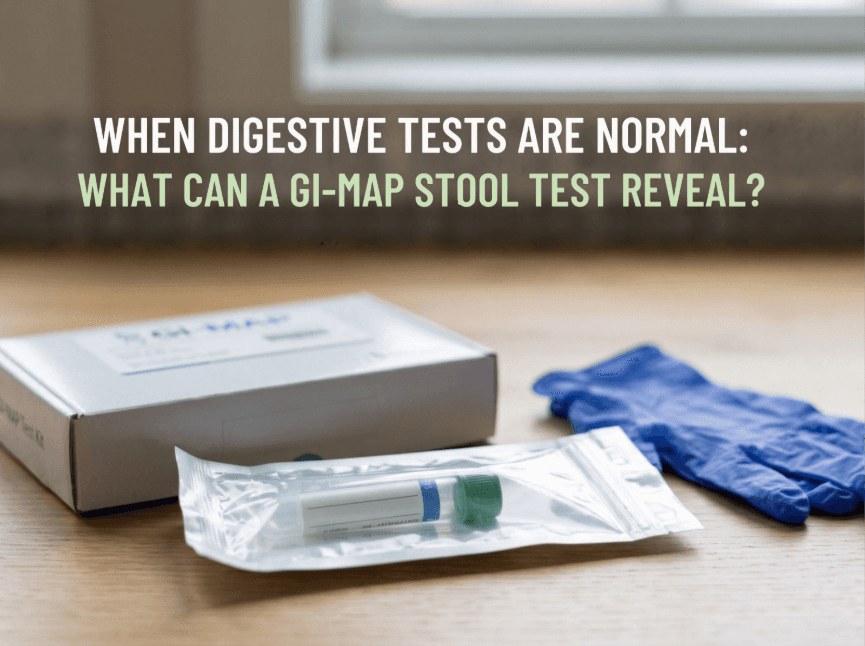
Quite frequently, patients come into our office sharing a story that we have heard many times before. They’ve been dealing with digestive symptoms for months, or sometimes years. Patients report symptoms such as persistent gas and bloating, irregular bowel patterns including diarrhea and constipation, heartburn/acid reflux, or discomfort after eating foods (often those generally accepted as “healthy”) that they used to tolerate just fine. In many cases, they’ve already seen several doctors and completed the recommended standard testing. Blood work comes back normal; imaging looks normal, and even colonoscopy results may be normal. They’ve tried prescriptions or over-the-counter medications and various supplements yet continue to suffer.
By the time many people arrive at our clinic, they’re often frustrated and discouraged. Being told that everything looks “fine” can sometimes make the experience even more confusing. Not having answers can add another layer of stress to symptoms that are already affecting their daily life. This is often the point where we start talking about the gut microbiome, and whether looking a little deeper at the digestive system might provide new clues. One tool we sometimes use for that is a stool test called the GI-MAP.
What is the GI-MAP Test?
The GI-MAP (Gastrointestinal Microbial Assay Plus) is a stool test that analyzes microbial DNA found in a stool sample. It is a comprehensive digestive function and microbiome assessment which can help provide insight as to the root cause of both gastrointestinal and other systemic symptoms. Using a technology called PCR (polymerase chain reaction), the test looks for genetic material from bacteria, parasites, and other microorganisms living in the digestive tract.
Because it detects microbial DNA directly, PCR-based testing can sometimes identify organisms that traditional culture-based stool tests may miss. Molecular techniques like this are increasingly used in clinical microbiology because they can detect microbes with greater sensitivity. GI-MAP testing can be appropriate and beneficial for individuals experiencing a wide range of health concerns linked to gut dysfunction.
The process itself is straightforward: a small stool sample is collected at home and sent to a laboratory for analysis.
Why Might I Consider This Test?
A very reasonable question many people ask is, “If my other tests were normal, why would this one be different”?
Many conventional stool tests are designed to detect acute infections, things like food poisoning or certain parasites. These tests can be extremely valuable when someone has an acute illness, but they don’t always provide insight into the broader microbial environment of the gut. The GI-MAP approaches gut health differently. Instead of looking only for acute infections, it can help provide a broader picture of the microbial ecosystem within the digestive tract.
Another question that naturally comes up with the testing is the cost. Functional stool testing like the GI-MAP can be an investment, and many people wonder whether it's worth pursuing after they've already tried other tests that didn't provide answers. For that reason, at the Center for Natural Medicine, our naturopathic physicians typically begin with a clinical conversation that includes a review of your current symptoms, health history, and any previous testing that has been performed to determine whether this type of analysis is likely to add meaningful information.

What Can This Test Teach Me About My Gut?
The gut microbiome refers to the vast community of trillions of micro organisms; primarily bacteria, but also viruses, fungi, and other microbes that live in the digestive tract. These microbes interact with each other and with the body in ways that support your digestion, help regulate your immune system, produce certain vitamins, and even influence your mood and how your brain functions through the gut–brain connection.
Because this microbial community functions as a dynamic, living system, it can be helpful to think of the gut microbiome like a garden. A healthy garden is balanced; the nutrients in the soil support the healthy growth of plants so they can thrive. If that balance is thrown off, weeds can begin to take over, or the soil might become depleted, which disrupts and changes the whole garden. Our digestive tract functions in a similar way. When helpful microbes are supported, they contribute to a stable and resilient environment. When that balance shifts, other organisms may begin to dominate, and symptoms can start to appear.
When reviewing a GI-MAP test, we’re not simply looking for a single “bad” organism. Instead, we’re trying to understand patterns within the gut environment, which can be like stepping back and assessing the overall health of the garden.
Some of the Areas That GI-MAP Testing Can Offer Insight into Are:
Microbial balance – whether your beneficial bacteria appear depleted or certain organisms are present in higher amounts
Potential pathogens – bacteria or parasites that could be contributing to digestive symptoms
Inflammatory markers – indicators of immune activity within your gut
Digestive function – markers related to enzyme activity and your body’s ability to break down food
Potential food sensitivities – by revealing imbalances or markers that suggest certain foods may be contributing to your symptoms. Learn more about food sensitivity testing and how it can help identify problematic foods.
Because the gut plays such a central role in overall health, imbalances here don’t always show digestive symptoms alone. In clinical practice, patterns we see on a GI-MAP test may also help provide context for concerns like IBS or SIBO, chronic fatigue, food sensitivities, autoimmune conditions, mood changes such as anxiety or depression, certain skin issues like acne or eczema, metabolic concerns, weight fluctuations, or even thyroid dysfunction. In these cases, the goal isn’t simply to name a diagnosis, but to better understand whether something happening in the gut might be contributing to the bigger picture of your health, providing additional clues that can help guide a more personalized treatment plan.
What Happens After the Results Come Back?
The real value of any lab test isn’t the report itself, but how the results are interpreted and what we do with the information. The gut microbiome is complex, as many organisms naturally live in the digestive tract. The goal isn’t simply to identify microbes, but to understand how those findings relate to a person’s symptoms and overall health picture.
If patterns appear on the test, we use that information to create a targeted plan aimed at restoring balance in the gut environment. Depending on the findings, this may include dietary adjustments, strategies to support beneficial bacteria, targeted antimicrobial support, or nutrients that help support digestive and immune function.
It’s also important to remember that no single lab test provides every answer. The GI-MAP is one tool that can help us look at the digestive system from a different perspective, and results are always interpreted alongside symptoms, medical history, and other laboratory findings. For many people who have struggled with persistent digestive symptoms, taking a closer look at the gut microbiome can sometimes provide valuable insight and a new direction for healing.
Could this Type of Testing Be Helpful for You?
If you’ve been dealing with ongoing digestive symptoms and feel like you still don’t have clear answers, a deeper look at the gut microbiome may be worth exploring. At the Center for Natural Medicine, our naturopathic physicians can provide a comprehensive clinical assessment to determine whether advanced testing, such as the GI-MAP, could offer useful insight into your situation. During your visit, your practitioner will review your symptoms, health history, and previous testing to help guide the next steps in your care.
Frequently Asked Questions:
Why would my digestive symptoms persist if my other tests were normal?
Many conventional digestive tests are designed to rule out serious diseases, which is extremely important. However, they don’t always evaluate the broader microbial environment of the gut. Looking more closely at the gut microbiome can provide additional insight into ongoing symptoms.
What symptoms might suggest an imbalance in the gut?
Bloating, gas after meals, constipation, diarrhea, food sensitivities, fatigue, or ongoing digestive discomfort can suggest a gut imbalance. These symptoms can have many possible causes, which is why a thorough clinical assessment is important.
How is the GI-MAP test performed?
The test involves collecting a small stool sample at home using a kit provided by your practitioner. The sample is then mailed to a specialized laboratory for analysis.
Can I order the GI-MAP test on my own?
The GI-MAP test is typically ordered through a licensed healthcare practitioner. This helps ensure that the test is appropriate for your situation and that the results are interpreted within the context of your symptoms, medical history, and other laboratory findings.
What happens after the results come back?
Your practitioner will review the results with you and discuss whether any patterns appear that may be relevant to your symptoms. From there, a personalized plan can be developed to support digestive health, restore balance in the gut, and identify whether food sensitivities may be playing a role.
References:
Gingras, B., & Maggiore, J. (2020). Performance of a new molecular assay for the detection of gastrointestinal pathogens. Access Microbiology, 2(11). https://doi.org/10.1099/acmi.0.000160
Hitch, T. C. A., Hall, L. J., Walsh, S. K., Leventhal, G. E., Slack, E., de Wouters, T., Walter, J., & Lawley, T. D. (2022). Microbiome-based interventions to modulate gut ecology and the immune system. Mucosal Immunology, 15, 1025–1033. https://doi.org/10.1038/s41385-022-00564-1
Peterson, C. L., Vetter, E. A., Patel, R., & Uhl, J. R. (2022). Clinical metagenomics are increasingly accurate and affordable to detect enteric bacterial pathogens in stools. Microorganisms, 10(2), 335. https://doi.org/10.3390/microorganisms10020335
Quite frequently, patients come into our office sharing a story that we have heard many times before. They’ve been dealing with digestive symptoms for months, or sometimes years. Patients report symptoms such as persistent gas and bloating, irregular bowel patterns including diarrhea and constipation, heartburn/acid reflux, or discomfort after eating foods (often those generally accepted as “healthy”) that they used to tolerate just fine. In many cases, they’ve already seen several doctors and completed the recommended standard testing. Blood work comes back normal; imaging looks normal, and even colonoscopy results may be normal. They’ve tried prescriptions or over-the-counter medications and various supplements yet continue to suffer.
By the time many people arrive at our clinic, they’re often frustrated and discouraged. Being told that everything looks “fine” can sometimes make the experience even more confusing. Not having answers can add another layer of stress to symptoms that are already affecting their daily life. This is often the point where we start talking about the gut microbiome, and whether looking a little deeper at the digestive system might provide new clues. One tool we sometimes use for that is a stool test called the GI-MAP.
What is the GI-MAP Test?
The GI-MAP (Gastrointestinal Microbial Assay Plus) is a stool test that analyzes microbial DNA found in a stool sample. It is a comprehensive digestive function and microbiome assessment which can help provide insight as to the root cause of both gastrointestinal and other systemic symptoms. Using a technology called PCR (polymerase chain reaction), the test looks for genetic material from bacteria, parasites, and other microorganisms living in the digestive tract.
Because it detects microbial DNA directly, PCR-based testing can sometimes identify organisms that traditional culture-based stool tests may miss. Molecular techniques like this are increasingly used in clinical microbiology because they can detect microbes with greater sensitivity. GI-MAP testing can be appropriate and beneficial for individuals experiencing a wide range of health concerns linked to gut dysfunction.
The process itself is straightforward: a small stool sample is collected at home and sent to a laboratory for analysis.
Why Might I Consider This Test?
A very reasonable question many people ask is, “If my other tests were normal, why would this one be different”?
Many conventional stool tests are designed to detect acute infections, things like food poisoning or certain parasites. These tests can be extremely valuable when someone has an acute illness, but they don’t always provide insight into the broader microbial environment of the gut. The GI-MAP approaches gut health differently. Instead of looking only for acute infections, it can help provide a broader picture of the microbial ecosystem within the digestive tract.
Another question that naturally comes up with the testing is the cost. Functional stool testing like the GI-MAP can be an investment, and many people wonder whether it's worth pursuing after they've already tried other tests that didn't provide answers. For that reason, at the Center for Natural Medicine, our naturopathic physicians typically begin with a clinical conversation that includes a review of your current symptoms, health history, and any previous testing that has been performed to determine whether this type of analysis is likely to add meaningful information.
What Can This Test Teach Me About My Gut?
The gut microbiome refers to the vast community of trillions of micro organisms; primarily bacteria, but also viruses, fungi, and other microbes that live in the digestive tract. These microbes interact with each other and with the body in ways that support your digestion, help regulate your immune system, produce certain vitamins, and even influence your mood and how your brain functions through the gut–brain connection.
Because this microbial community functions as a dynamic, living system, it can be helpful to think of the gut microbiome like a garden. A healthy garden is balanced; the nutrients in the soil support the healthy growth of plants so they can thrive. If that balance is thrown off, weeds can begin to take over, or the soil might become depleted, which disrupts and changes the whole garden. Our digestive tract functions in a similar way. When helpful microbes are supported, they contribute to a stable and resilient environment. When that balance shifts, other organisms may begin to dominate, and symptoms can start to appear.
When reviewing a GI-MAP test, we’re not simply looking for a single “bad” organism. Instead, we’re trying to understand patterns within the gut environment, which can be like stepping back and assessing the overall health of the garden.
Some of the Areas That GI-MAP Testing Can Offer Insight into Are:
Microbial balance – whether your beneficial bacteria appear depleted or certain organisms are present in higher amounts
Potential pathogens – bacteria or parasites that could be contributing to digestive symptoms
Inflammatory markers – indicators of immune activity within your gut
Digestive function – markers related to enzyme activity and your body’s ability to break down food
Potential food sensitivities – by revealing imbalances or markers that suggest certain foods may be contributing to your symptoms. Learn more about food sensitivity testing and how it can help identify problematic foods.
Because the gut plays such a central role in overall health, imbalances here don’t always show digestive symptoms alone. In clinical practice, patterns we see on a GI-MAP test may also help provide context for concerns like IBS or SIBO, chronic fatigue, food sensitivities, autoimmune conditions, mood changes such as anxiety or depression, certain skin issues like acne or eczema, metabolic concerns, weight fluctuations, or even thyroid dysfunction. In these cases, the goal isn’t simply to name a diagnosis, but to better understand whether something happening in the gut might be contributing to the bigger picture of your health, providing additional clues that can help guide a more personalized treatment plan.
What Happens After the Results Come Back?
The real value of any lab test isn’t the report itself, but how the results are interpreted and what we do with the information. The gut microbiome is complex, as many organisms naturally live in the digestive tract. The goal isn’t simply to identify microbes, but to understand how those findings relate to a person’s symptoms and overall health picture.
If patterns appear on the test, we use that information to create a targeted plan aimed at restoring balance in the gut environment. Depending on the findings, this may include dietary adjustments, strategies to support beneficial bacteria, targeted antimicrobial support, or nutrients that help support digestive and immune function.
It’s also important to remember that no single lab test provides every answer. The GI-MAP is one tool that can help us look at the digestive system from a different perspective, and results are always interpreted alongside symptoms, medical history, and other laboratory findings. For many people who have struggled with persistent digestive symptoms, taking a closer look at the gut microbiome can sometimes provide valuable insight and a new direction for healing.
Could this Type of Testing Be Helpful for You?
If you’ve been dealing with ongoing digestive symptoms and feel like you still don’t have clear answers, a deeper look at the gut microbiome may be worth exploring. At the Center for Natural Medicine, our naturopathic physicians can provide a comprehensive clinical assessment to determine whether advanced testing, such as the GI-MAP, could offer useful insight into your situation. During your visit, your practitioner will review your symptoms, health history, and previous testing to help guide the next steps in your care.
Frequently Asked Questions:
Why would my digestive symptoms persist if my other tests were normal?
Many conventional digestive tests are designed to rule out serious diseases, which is extremely important. However, they don’t always evaluate the broader microbial environment of the gut. Looking more closely at the gut microbiome can provide additional insight into ongoing symptoms.
What symptoms might suggest an imbalance in the gut?
Bloating, gas after meals, constipation, diarrhea, food sensitivities, fatigue, or ongoing digestive discomfort can suggest a gut imbalance. These symptoms can have many possible causes, which is why a thorough clinical assessment is important.
How is the GI-MAP test performed?
The test involves collecting a small stool sample at home using a kit provided by your practitioner. The sample is then mailed to a specialized laboratory for analysis.
Can I order the GI-MAP test on my own?
The GI-MAP test is typically ordered through a licensed healthcare practitioner. This helps ensure that the test is appropriate for your situation and that the results are interpreted within the context of your symptoms, medical history, and other laboratory findings.
What happens after the results come back?
Your practitioner will review the results with you and discuss whether any patterns appear that may be relevant to your symptoms. From there, a personalized plan can be developed to support digestive health, restore balance in the gut, and identify whether food sensitivities may be playing a role.
References:
Gingras, B., & Maggiore, J. (2020). Performance of a new molecular assay for the detection of gastrointestinal pathogens. Access Microbiology, 2(11). https://doi.org/10.1099/acmi.0.000160
Hitch, T. C. A., Hall, L. J., Walsh, S. K., Leventhal, G. E., Slack, E., de Wouters, T., Walter, J., & Lawley, T. D. (2022). Microbiome-based interventions to modulate gut ecology and the immune system. Mucosal Immunology, 15, 1025–1033. https://doi.org/10.1038/s41385-022-00564-1
Peterson, C. L., Vetter, E. A., Patel, R., & Uhl, J. R. (2022). Clinical metagenomics are increasingly accurate and affordable to detect enteric bacterial pathogens in stools. Microorganisms, 10(2), 335. https://doi.org/10.3390/microorganisms10020335
Latest Blogs

What Is a Holistic Health Practitioner? Roles, Benefits, and What to Expect
Oct 12, 2026

What Is Outpatient Mental Health Therapy? A Clear, Honest Breakdown
Aug 31, 2026

The 90-Day Wall: Why Most Wellness Plans Collapse by Month Three
Aug 6, 2026

Why More People Are Turning to a Functional Medicine Health Coach for Root-Cause Healing
Jul 14, 2026

Navigating the Healthcare System: Finding the Right Approach
Jun 27, 2026

Eating Closer to Nature: 5 Benefits of Choosing a Whole Foods Diet
Jun 19, 2026
Connect with us to begin your healing journey today.
Experience holistic healing that restores balance and vitality.

Connect with us to begin
your healing journey today.
Experience holistic healing that restores balance and vitality.
Connect with us to begin
your healing journey today.
Experience holistic healing that restores balance and vitality.
Connect with us to begin
your healing journey today.
Experience holistic healing that restores balance and vitality.
Latest New & Blogs
Related Blog Post
Related Blog Post
Newsletter Signup
Newsletter Signup
Newsletter Signup
Newsletter Signup
Get wellness tips, health insights, and exclusive updates in your inbox.
Get wellness tips, health insights, and exclusive updates in your inbox.
Get wellness tips, health insights, and exclusive updates in your inbox.
Get wellness tips, health insights, and exclusive updates in your inbox.