Table of Content
Title

Connect with
us to begin your healing journey today.
Experience holistic healing that restores balance and vitality.
Sleep as Medicine: How to Restore Your Sleep Naturally
Sleep as Medicine: How to Restore Your Sleep Naturally
Sleep as Medicine: How to Restore Your Sleep Naturally
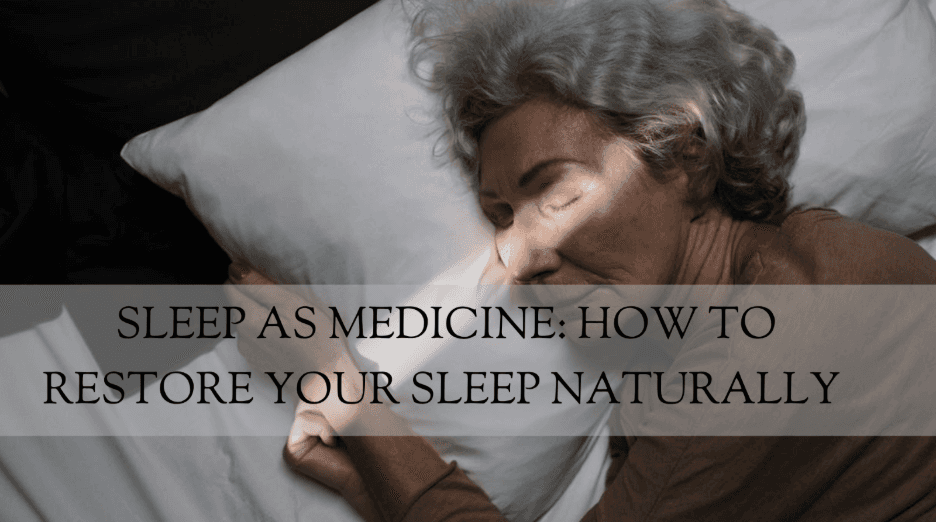
Sleep is often treated like some sort of negotiable item, where we can trim a little when life goes busy then “catch up” later. But sleep isn’t really a luxury, it’s not only a quiet downtime, either. Sleep is a biological process, and it keeps moving along, actively working for healing, restoration, and even stamina. When sleep gets disturbed, those effects ripple through almost every system in the body, like none of them are fully optional.
At the Center for Natural Medicine, we view sleep as foundational medicine; a daily opportunity for the body to restore balance, regulate stress, and support long-term health.
Sleep Is an Active Healing Process
Sleep isn’t only “rest,” it’s like a working, active sequence that helps fix and bring back the body. While you sleep, the body supports immune regulation, keeps hormone balance on track, does metabolic repair, supports emotional processing, and protects brain health too. If sleep is short, fragmented, or just plain off, these functions can drop. Then you can start seeing trouble in the short term and in the long run, sometimes quietly at first.
Even small reductions in sleep can make your body act as if it’s in danger, like something is off. That can switch on stress pathways, raise nervous system vigilance, and nudge hormone balance in the wrong direction.
So, when sleep takes a hit, the body can behave as though it’s under threat even when there is no real immediate danger.
Hidden Stress and Its Effects
This protective mode doesn’t always need the classic signs, where you feel anxious or emotionally flooded. You might be carrying that stress in smaller ways, like holding it in, managing it “well” on the surface. For instance, you could be super-organized, over-preparing, quietly forcing yourself through tasks, or avoiding conflict. You may look calm at work or at home, but inside your nervous system is still on alert, still moving around like it’s waiting for something.
Even when you don’t notice obvious tension, or you don’t feel “anxious” in the usual way, your body might not have gotten the message that it’s safe to fully downshift and rest. When that lower-grade protective state keeps going, the body starts moving away from restoration. Sensory nerves can turn more reactive, and that can make pain feel sharper. Inflammatory processes may rise too, which can link up with joint discomfort or flare-ups in arthritic situations. Muscles often stay mildly braced, and that can affect healthy blood flow, limiting how well oxygen and nutrients reach areas that need repair.
The energy that should go toward healing, hydration, and immune support gets redirected just to keep everything going. Recovery slows, because the body doesn’t yet feel safe enough to prioritize repair. That’s where rhythm really matters, and not in a vague sense.
Many people who push through chronic stress, or who feel some nervous system imbalances, also do well with personalized support via functional medicine health coaching. This kind of coaching tends to focus on sustainable lifestyle changes, stress resilience, and overall well-being, in a grounded, practical way.
Circadian Rhythm: Why Consistency Matters More Than You Think
Sleep quality isn’t just about how long you sleep; it’s also about when you sleep. Your body runs on a circadian rhythm, basically a almost 24-hour internal clock that keeps things lined up, like sleep timing, hormone release, metabolism, immune work, and even temperature regulation.
Lately, it’s, honestly, pretty easy to throw that rhythm off. Unsteady bedtimes, wake times that slowly drift, light lingering in the evening, and shift-like routines can all confuse the internal clock. And even when the total sleep time looks normal on paper, the messed-up timing can make sleep feel light, kind of shallow, or not actually restoring like it should.
Keeping a regular sleep schedule, even on weekends, is one of the strongest ways to back up natural sleep recovery. When you’re consistent, the nervous system can “predict” rest. So the body can slide more smoothly into deeper, more reparative sleep stages.
Sleep and Stress: A Two-Way Street
Sleep and stress are connected much closer then most people expect. Plenty of folks notice they sleep worse when life is stressful, but here’s the twist, poor sleep can also create stress inside the body. Stress makes sleep harder, and sleep disruption wakes up the body’s stress response. When sleep gets cut short or keeps getting interrupted, the nervous system and hormone systems that manage stress reactions get more active. This can lead to higher alertness, and more tension.
Over time, that cycle can make you more reactive to later stressors, while also lowering your ability to fully settle down and relax. That’s why long-term poor sleep is often paired with anxiety, irritability, trouble focusing, and that “tired but wired” feeling. The nervous system just never really drops into true recovery mode. It stays sort of on watch, always.
If you’re dealing with stress-related sleep problems, psychotherapy services in Connecticut, along with mind body therapies, might provide extra support for emotional regulation and nervous system balance.
Why Sleep Is So Often Underestimated
Sleep touches nearly all of health, and yet it’s kind of treated like an afterthought only once things go sideways. When sleep gets messed up, like chronically, it can nudge inflammation upward, throw off glucose management, shift mood and energy, and even raise the odds of longer-term health worries. Still, a lot of people end up “trying to sleep” instead of supporting sleep, lying in bed willing themselves to drop off, checking the clock over and over, attempting to switch off thoughts, or stressing about how little they rested last night—like that worry will magically fix it.
On the other hand, helping sleep naturally is more about working with how the body is wired. It’s less about force, and more about easing the nervous system, staying consistent with a sleep rhythm, dialing back evening stimulation, and then looking at the stress routines that keep your body from really settling down.
Some people also explore supportive, complementary approaches, like reiki energy healing in Connecticut, usually to find relaxation, stress relief, and added nervous system support.

Supporting Sleep, Naturally and Individually
Restoring sleep naturally starts by setting things up so your body feels safe enough to rest. A few of the big levers include:
Keeping sleep and wake times roughly the same
Getting healthy light exposure across the day
Building calming evening routines, not just “hoping” for the best
Taking a closer look at daily stress load and nervous system regulation
For some, those adjustments are enough. For others, sleep problems seem to have extra layers, and they can benefit from more personal guidance.
So if you’re feeling ready to rebuild your sleep and support your body’s own healing potential, the Center for Natural Medicine team is here. Our Naturopathic Doctors, Functional Medicine Health Coach, and Hypnotherapist will work with you to uncover the root drivers behind disrupted sleep and build individualized steps for more restful nights. These methods don’t just cover symptoms. They help your body relearn how to ease into relaxation, recover properly, and heal in a way that makes waking up feel a bit more grounded and restored.
For people who want extra help around stress patterns, anxiety, or sleep concerns, hypnosis therapy might help guide the nervous system toward relaxation, plus healthier sleep habits, as part of a wider, multidisciplinary treatment plan. Sleep isn’t something you force. It’s something the body allows when the conditions are right.
References:
Medic, G., Wille, M., & Hemels, M. E. H. (2017). Short- and long-term health consequences of sleep disruption. Nature and Science of Sleep, 9, 151–161. https://doi.org/10.2147/NSS.S134864
Meerlo, P., Sgoifo, A., & Suchecki, D. (2008). Restricted and disrupted sleep: Effects on autonomic function, neuroendocrine stress systems and stress responsivity. Sleep Medicine Reviews, 12(3), 197–210. https://doi.org/10.1016/j.smrv.2007.07.007
Potter, G. D. M., Skene, D. J., Arendt, J., Cade, J. E., Grant, P. J., & Hardie, L. J. (2016). Circadian rhythm and sleep disruption: Causes, metabolic consequences, and countermeasures. Endocrine Reviews, 37(6), 584–608. https://pmc.ncbi.nlm.nih.gov/articles/PMC5142605/
Frequently Asked Questions
Why is sleep so important for overall health?
Sleep is super important for your general wellbeing, because it’s like one of the body’s main repair things. While sleeping, your body goes and restores energy, balances hormones, backs up immune function, and it also helps to work through emotions a bit. If sleep gets messed with again and again then over time it can mess with your physical health and also your mind, sort of both at once, not just one.
How does stress mess with sleep?
Stress keeps your nervous system stuck in a ready mode, like you should be alert and moving, so your body can’t fully unwind at night. Even when you dont feel “that” anxious, constant stress can quietly stop deep restorative sleep. Then the next day you’re tired, but it feels like the tiredness is stuck there, if that makes sense.
What is the circadian rhythm, in plain words?
Circadian rhythm is basically your internal clock; it tells you when to feel awake, and when it makes you feel drowsy. If your sleep and wake schedule stay steady, your body stays lined up with that natural timing. Then it’s usually easier to fall asleep, and waking up feels more refreshing.
Sometimes we tired but we still can’t sleep?
This happens a lot when the nervous system is overstimulated. Your body may be tired in a physical way, yet stress hormones, plus mental pressure, can keep your mind kind of switched on. So, you end up feeling drained, but you cannot fully settle down.
Can sleep problems affect other parts of the body?
Yes, absolutely. Poor sleep can shift your mood, reduce focus, drain your energy, weaken immune health, raise inflammation, and throw off hormone balance. And after a while, when quality sleep is missing, your body might also handle stress and recovery in a worse way.
Sleep is often treated like some sort of negotiable item, where we can trim a little when life goes busy then “catch up” later. But sleep isn’t really a luxury, it’s not only a quiet downtime, either. Sleep is a biological process, and it keeps moving along, actively working for healing, restoration, and even stamina. When sleep gets disturbed, those effects ripple through almost every system in the body, like none of them are fully optional.
At the Center for Natural Medicine, we view sleep as foundational medicine; a daily opportunity for the body to restore balance, regulate stress, and support long-term health.
Sleep Is an Active Healing Process
Sleep isn’t only “rest,” it’s like a working, active sequence that helps fix and bring back the body. While you sleep, the body supports immune regulation, keeps hormone balance on track, does metabolic repair, supports emotional processing, and protects brain health too. If sleep is short, fragmented, or just plain off, these functions can drop. Then you can start seeing trouble in the short term and in the long run, sometimes quietly at first.
Even small reductions in sleep can make your body act as if it’s in danger, like something is off. That can switch on stress pathways, raise nervous system vigilance, and nudge hormone balance in the wrong direction.
So, when sleep takes a hit, the body can behave as though it’s under threat even when there is no real immediate danger.
Hidden Stress and Its Effects
This protective mode doesn’t always need the classic signs, where you feel anxious or emotionally flooded. You might be carrying that stress in smaller ways, like holding it in, managing it “well” on the surface. For instance, you could be super-organized, over-preparing, quietly forcing yourself through tasks, or avoiding conflict. You may look calm at work or at home, but inside your nervous system is still on alert, still moving around like it’s waiting for something.
Even when you don’t notice obvious tension, or you don’t feel “anxious” in the usual way, your body might not have gotten the message that it’s safe to fully downshift and rest. When that lower-grade protective state keeps going, the body starts moving away from restoration. Sensory nerves can turn more reactive, and that can make pain feel sharper. Inflammatory processes may rise too, which can link up with joint discomfort or flare-ups in arthritic situations. Muscles often stay mildly braced, and that can affect healthy blood flow, limiting how well oxygen and nutrients reach areas that need repair.
The energy that should go toward healing, hydration, and immune support gets redirected just to keep everything going. Recovery slows, because the body doesn’t yet feel safe enough to prioritize repair. That’s where rhythm really matters, and not in a vague sense.
Many people who push through chronic stress, or who feel some nervous system imbalances, also do well with personalized support via functional medicine health coaching. This kind of coaching tends to focus on sustainable lifestyle changes, stress resilience, and overall well-being, in a grounded, practical way.
Circadian Rhythm: Why Consistency Matters More Than You Think
Sleep quality isn’t just about how long you sleep; it’s also about when you sleep. Your body runs on a circadian rhythm, basically a almost 24-hour internal clock that keeps things lined up, like sleep timing, hormone release, metabolism, immune work, and even temperature regulation.
Lately, it’s, honestly, pretty easy to throw that rhythm off. Unsteady bedtimes, wake times that slowly drift, light lingering in the evening, and shift-like routines can all confuse the internal clock. And even when the total sleep time looks normal on paper, the messed-up timing can make sleep feel light, kind of shallow, or not actually restoring like it should.
Keeping a regular sleep schedule, even on weekends, is one of the strongest ways to back up natural sleep recovery. When you’re consistent, the nervous system can “predict” rest. So the body can slide more smoothly into deeper, more reparative sleep stages.
Sleep and Stress: A Two-Way Street
Sleep and stress are connected much closer then most people expect. Plenty of folks notice they sleep worse when life is stressful, but here’s the twist, poor sleep can also create stress inside the body. Stress makes sleep harder, and sleep disruption wakes up the body’s stress response. When sleep gets cut short or keeps getting interrupted, the nervous system and hormone systems that manage stress reactions get more active. This can lead to higher alertness, and more tension.
Over time, that cycle can make you more reactive to later stressors, while also lowering your ability to fully settle down and relax. That’s why long-term poor sleep is often paired with anxiety, irritability, trouble focusing, and that “tired but wired” feeling. The nervous system just never really drops into true recovery mode. It stays sort of on watch, always.
If you’re dealing with stress-related sleep problems, psychotherapy services in Connecticut, along with mind body therapies, might provide extra support for emotional regulation and nervous system balance.
Why Sleep Is So Often Underestimated
Sleep touches nearly all of health, and yet it’s kind of treated like an afterthought only once things go sideways. When sleep gets messed up, like chronically, it can nudge inflammation upward, throw off glucose management, shift mood and energy, and even raise the odds of longer-term health worries. Still, a lot of people end up “trying to sleep” instead of supporting sleep, lying in bed willing themselves to drop off, checking the clock over and over, attempting to switch off thoughts, or stressing about how little they rested last night—like that worry will magically fix it.
On the other hand, helping sleep naturally is more about working with how the body is wired. It’s less about force, and more about easing the nervous system, staying consistent with a sleep rhythm, dialing back evening stimulation, and then looking at the stress routines that keep your body from really settling down.
Some people also explore supportive, complementary approaches, like reiki energy healing in Connecticut, usually to find relaxation, stress relief, and added nervous system support.
Supporting Sleep, Naturally and Individually
Restoring sleep naturally starts by setting things up so your body feels safe enough to rest. A few of the big levers include:
Keeping sleep and wake times roughly the same
Getting healthy light exposure across the day
Building calming evening routines, not just “hoping” for the best
Taking a closer look at daily stress load and nervous system regulation
For some, those adjustments are enough. For others, sleep problems seem to have extra layers, and they can benefit from more personal guidance.
So if you’re feeling ready to rebuild your sleep and support your body’s own healing potential, the Center for Natural Medicine team is here. Our Naturopathic Doctors, Functional Medicine Health Coach, and Hypnotherapist will work with you to uncover the root drivers behind disrupted sleep and build individualized steps for more restful nights. These methods don’t just cover symptoms. They help your body relearn how to ease into relaxation, recover properly, and heal in a way that makes waking up feel a bit more grounded and restored.
For people who want extra help around stress patterns, anxiety, or sleep concerns, hypnosis therapy might help guide the nervous system toward relaxation, plus healthier sleep habits, as part of a wider, multidisciplinary treatment plan. Sleep isn’t something you force. It’s something the body allows when the conditions are right.
References:
Medic, G., Wille, M., & Hemels, M. E. H. (2017). Short- and long-term health consequences of sleep disruption. Nature and Science of Sleep, 9, 151–161. https://doi.org/10.2147/NSS.S134864
Meerlo, P., Sgoifo, A., & Suchecki, D. (2008). Restricted and disrupted sleep: Effects on autonomic function, neuroendocrine stress systems and stress responsivity. Sleep Medicine Reviews, 12(3), 197–210. https://doi.org/10.1016/j.smrv.2007.07.007
Potter, G. D. M., Skene, D. J., Arendt, J., Cade, J. E., Grant, P. J., & Hardie, L. J. (2016). Circadian rhythm and sleep disruption: Causes, metabolic consequences, and countermeasures. Endocrine Reviews, 37(6), 584–608. https://pmc.ncbi.nlm.nih.gov/articles/PMC5142605/
Frequently Asked Questions
Why is sleep so important for overall health?
Sleep is super important for your general wellbeing, because it’s like one of the body’s main repair things. While sleeping, your body goes and restores energy, balances hormones, backs up immune function, and it also helps to work through emotions a bit. If sleep gets messed with again and again then over time it can mess with your physical health and also your mind, sort of both at once, not just one.
How does stress mess with sleep?
Stress keeps your nervous system stuck in a ready mode, like you should be alert and moving, so your body can’t fully unwind at night. Even when you dont feel “that” anxious, constant stress can quietly stop deep restorative sleep. Then the next day you’re tired, but it feels like the tiredness is stuck there, if that makes sense.
What is the circadian rhythm, in plain words?
Circadian rhythm is basically your internal clock; it tells you when to feel awake, and when it makes you feel drowsy. If your sleep and wake schedule stay steady, your body stays lined up with that natural timing. Then it’s usually easier to fall asleep, and waking up feels more refreshing.
Sometimes we tired but we still can’t sleep?
This happens a lot when the nervous system is overstimulated. Your body may be tired in a physical way, yet stress hormones, plus mental pressure, can keep your mind kind of switched on. So, you end up feeling drained, but you cannot fully settle down.
Can sleep problems affect other parts of the body?
Yes, absolutely. Poor sleep can shift your mood, reduce focus, drain your energy, weaken immune health, raise inflammation, and throw off hormone balance. And after a while, when quality sleep is missing, your body might also handle stress and recovery in a worse way.
Latest Blogs

What Is a Holistic Health Practitioner? Roles, Benefits, and What to Expect
Oct 12, 2026

What Is Outpatient Mental Health Therapy? A Clear, Honest Breakdown
Aug 31, 2026

The 90-Day Wall: Why Most Wellness Plans Collapse by Month Three
Aug 6, 2026

Why More People Are Turning to a Functional Medicine Health Coach for Root-Cause Healing
Jul 14, 2026

Navigating the Healthcare System: Finding the Right Approach
Jun 27, 2026

Eating Closer to Nature: 5 Benefits of Choosing a Whole Foods Diet
Jun 19, 2026
Connect with us to begin your healing journey today.
Experience holistic healing that restores balance and vitality.

Connect with us to begin
your healing journey today.
Experience holistic healing that restores balance and vitality.
Connect with us to begin
your healing journey today.
Experience holistic healing that restores balance and vitality.
Connect with us to begin
your healing journey today.
Experience holistic healing that restores balance and vitality.
Latest New & Blogs
Related Blog Post
Related Blog Post
Newsletter Signup
Newsletter Signup
Newsletter Signup
Newsletter Signup
Get wellness tips, health insights, and exclusive updates in your inbox.
Get wellness tips, health insights, and exclusive updates in your inbox.
Get wellness tips, health insights, and exclusive updates in your inbox.
Get wellness tips, health insights, and exclusive updates in your inbox.