Table of Content
Title

Connect with
us to begin your healing journey today.
Experience holistic healing that restores balance and vitality.
Self-Compassion and Health: Why Being Kind to Yourself Matters
Self-Compassion and Health: Why Being Kind to Yourself Matters
Self-Compassion and Health: Why Being Kind to Yourself Matters
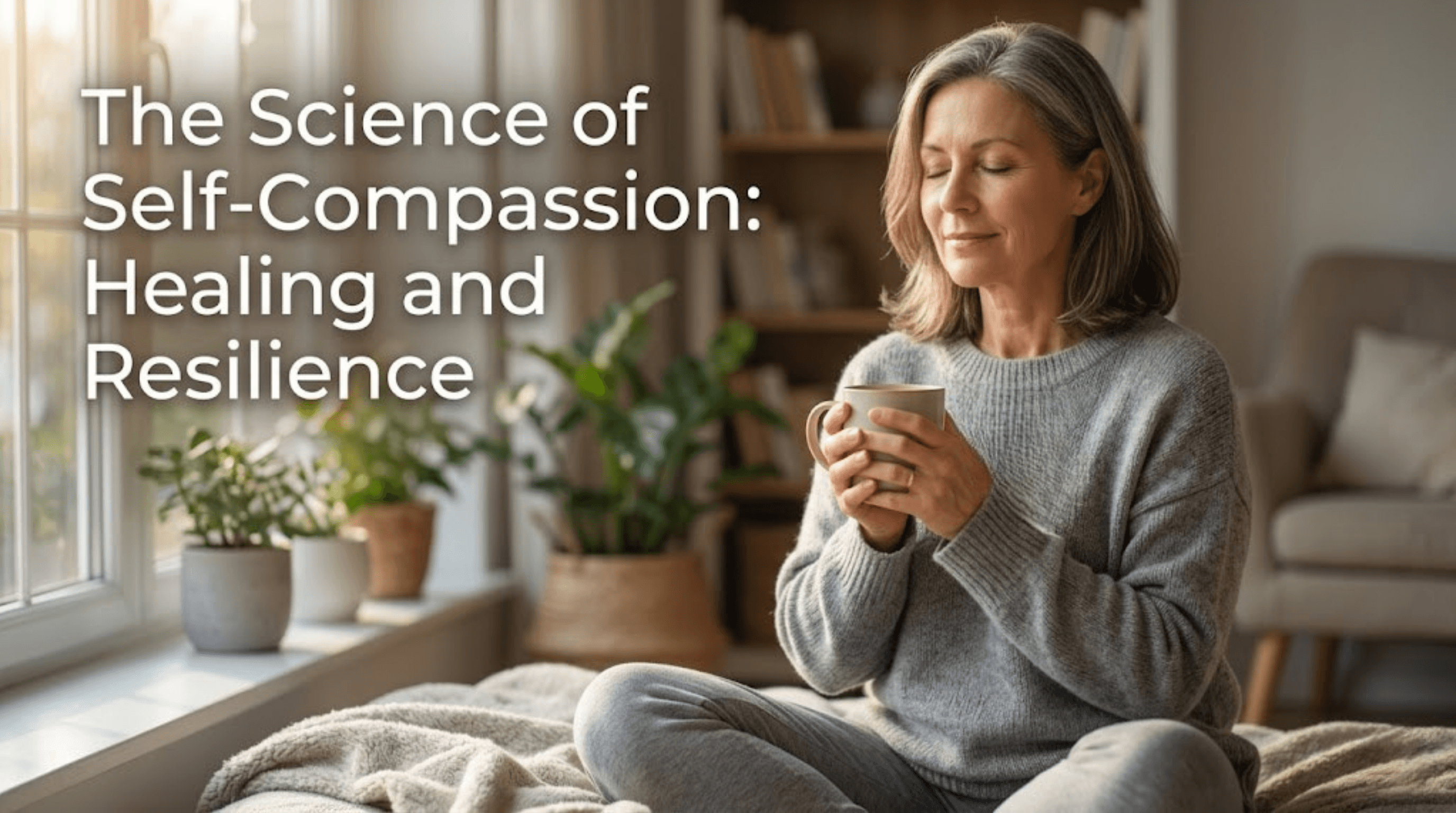
Quick Answer: Self-compassion is the practice of treating yourself with kindness, mindfulness, and understanding during difficult moments. Research suggests it may support emotional resilience, stress regulation, and overall well-being by reducing self-judgment, isolation, and overidentification with painful thoughts while fostering self-kindness and common humanity.
Why Self-Compassion Matters
Many people move through life carrying an exhausting inner dialogue, and perhaps you may have noticed this pattern within your own life:
“I’m failing.”
“I should be doing more.”
“Why can’t I handle this better?”
Over time, constant self-criticism can become so familiar that we aren’t even consciously aware of it, but the body picks up these messages. Research suggests that chronic emotional stress and harsh self-judgment can influence sleep patterns, inflammatory responses, immune function, mood, and the nervous system’s ability to regulate stress.
Self-compassion is sometimes misunderstood as weakness or avoidance of responsibility, but it’s about learning to respond to ourselves with greater patience, awareness, and support when we are struggling or experiencing difficult moments. Instead of motivating ourselves through shame or internal pressure, self-compassion encourages a healthier and more sustainable relationship with ourselves.
Self-Compassion During Illness, Stress, and Uncertainty
This becomes especially important during periods of illness, emotional overwhelm, chronic stress, or uncertainty. Many people silently carry thoughts like:
“Why is my body betraying me?”
“I’m scared I’ll never feel better.”
“I’m so tired of struggling.”
Those reactions are understandable, but when fear, hopelessness, and self-criticism become constant internal states, the nervous system may remain stuck in patterns of stress and threat rather than safety and recovery.
The Six Components of Self-Compassion
Researcher Kristin Neff describes self-compassion as involving six important components: increasing self-kindness, mindfulness, and a sense of common humanity while reducing self-judgment, isolation, and overidentification with painful thoughts and emotions.
Self-Kindness
Self-kindness means learning to respond to ourselves gently instead of harshly when we’re struggling. Rather than attacking ourselves internally, we begin offering ourselves the same care we would naturally give someone we love. Neff also discusses how simple acts of self-soothing, such as giving yourself a hug, may help activate the body’s care and calming systems. The body often responds to those nurturing gestures, whether they come from another person or from us.
Common Humanity
The second component, common humanity, reminds us that suffering is part of the shared human experience. So many people silently believe they are alone in their struggles or somehow broken. But illness, fear, uncertainty, and emotional pain are experiences all human beings encounter at different points in life. Remembering this can help soften the isolation that often accompanies chronic stress or health challenges.
Mindfulness
Mindfulness involves becoming aware of our thoughts and emotions without suppressing them or becoming consumed by them. It’s learning to notice our feelings with honesty and balance rather than ignoring pain or catastrophizing it.

What Increases Emotional Suffering?
Self-compassion also helps soften the patterns that often intensify suffering. Self-judgment can keep people trapped in cycles of shame and internal pressure. Isolation can create the feeling that no one else could possibly understand what we’re experiencing. Overidentification occurs when fear, symptoms, or emotional pain begin to define our entire sense of self.
Over time, learning to respond to ourselves with greater compassion may help create a more emotionally supportive internal environment, one that fosters resilience and emotional regulation rather than chronic self-attack.
Simple Ways to Practice Self-Compassion
Notice Your Internal Dialogue
One simple place to begin is by noticing your internal dialogue. When self-critical thoughts arise, pause and ask yourself:
“Would I speak this way to someone I love?”
Then try gently shifting your response:
“This is hard right now.”
“I’m doing the best I can.”
“Healing and growth take time.”
From here, self-compassion can also be supported through small moments of self-soothing. Something as simple as placing a hand on your heart and speaking kindly to yourself during difficult moments can help strengthen self-compassion just as effectively as a meditation practice.
Use Journaling for Reflection
Journaling can also be a powerful tool. For one week, try reflecting on moments that caused stress, shame, self-judgment, or emotional pain. Then gently rewrite those thoughts from a more compassionate perspective. Consider the words you would say to a close friend or loved one.
How Self-Compassion Supports Healing and Recovery
Often, awareness is the first step toward changing the patterns that keep us stuck because the body tends to function and recover better in an emotional environment that feels supported rather than attacked. These small shifts are not about pretending everything is okay, but about creating an inner environment that feels more supportive, safe, and compassionate while navigating illness or difficult life moments.
A Whole-Person Approach to Healing
At the Center for Natural Medicine, we understand that healing involves more than physical symptoms alone. Emotional stress, chronic self-criticism, and the way we relate to ourselves internally can all influence overall well-being. Our practitioners take an integrative approach that supports the connection between mind, body, emotional health, and healing. If you’re looking for care that recognizes the whole person, we invite you to connect with one of our practitioners.
References:
Neff, K. (2011). Self-compassion: The proven power of being kind to yourself. William Morrow.
Neff, K. D. (2023). Self-compassion: Theory, method, research, and intervention. Annual Review of Psychology, 74, 193–218. https://doi.org/10.1146/annurev-psych-032420-031047
Frequently Asked Question
What is self-compassion?
Self-compassion is the practice of responding to yourself with kindness, patience, and understanding during difficult moments instead of harsh self-judgment.
Can stress and self-criticism affect health?
Chronic stress and ongoing emotional strain may influence sleep, inflammation, mood, immune function, and the nervous system’s ability to regulate stress over time.
What are the components of self-compassion?
Kristin Neff describes self-compassion as increasing self-kindness, mindfulness, and common humanity while reducing self-judgment, isolation, and overidentification with painful thoughts and emotions.
How can I start practicing self-compassion?
Start by becoming more aware of your internal dialogue. Journaling, mindfulness, supportive self-talk, and slowing down during stressful moments can help shift patterns of chronic self-criticism.
Is self-compassion the same as avoiding responsibility?
No. Self-compassion is not about ignoring problems or avoiding accountability. It’s about responding to challenges with greater balance, support, and emotional awareness instead of shame and harsh self-criticism.
Quick Answer: Self-compassion is the practice of treating yourself with kindness, mindfulness, and understanding during difficult moments. Research suggests it may support emotional resilience, stress regulation, and overall well-being by reducing self-judgment, isolation, and overidentification with painful thoughts while fostering self-kindness and common humanity.
Why Self-Compassion Matters
Many people move through life carrying an exhausting inner dialogue, and perhaps you may have noticed this pattern within your own life:
“I’m failing.”
“I should be doing more.”
“Why can’t I handle this better?”
Over time, constant self-criticism can become so familiar that we aren’t even consciously aware of it, but the body picks up these messages. Research suggests that chronic emotional stress and harsh self-judgment can influence sleep patterns, inflammatory responses, immune function, mood, and the nervous system’s ability to regulate stress.
Self-compassion is sometimes misunderstood as weakness or avoidance of responsibility, but it’s about learning to respond to ourselves with greater patience, awareness, and support when we are struggling or experiencing difficult moments. Instead of motivating ourselves through shame or internal pressure, self-compassion encourages a healthier and more sustainable relationship with ourselves.
Self-Compassion During Illness, Stress, and Uncertainty
This becomes especially important during periods of illness, emotional overwhelm, chronic stress, or uncertainty. Many people silently carry thoughts like:
“Why is my body betraying me?”
“I’m scared I’ll never feel better.”
“I’m so tired of struggling.”
Those reactions are understandable, but when fear, hopelessness, and self-criticism become constant internal states, the nervous system may remain stuck in patterns of stress and threat rather than safety and recovery.
The Six Components of Self-Compassion
Researcher Kristin Neff describes self-compassion as involving six important components: increasing self-kindness, mindfulness, and a sense of common humanity while reducing self-judgment, isolation, and overidentification with painful thoughts and emotions.
Self-Kindness
Self-kindness means learning to respond to ourselves gently instead of harshly when we’re struggling. Rather than attacking ourselves internally, we begin offering ourselves the same care we would naturally give someone we love. Neff also discusses how simple acts of self-soothing, such as giving yourself a hug, may help activate the body’s care and calming systems. The body often responds to those nurturing gestures, whether they come from another person or from us.
Common Humanity
The second component, common humanity, reminds us that suffering is part of the shared human experience. So many people silently believe they are alone in their struggles or somehow broken. But illness, fear, uncertainty, and emotional pain are experiences all human beings encounter at different points in life. Remembering this can help soften the isolation that often accompanies chronic stress or health challenges.
Mindfulness
Mindfulness involves becoming aware of our thoughts and emotions without suppressing them or becoming consumed by them. It’s learning to notice our feelings with honesty and balance rather than ignoring pain or catastrophizing it.
What Increases Emotional Suffering?
Self-compassion also helps soften the patterns that often intensify suffering. Self-judgment can keep people trapped in cycles of shame and internal pressure. Isolation can create the feeling that no one else could possibly understand what we’re experiencing. Overidentification occurs when fear, symptoms, or emotional pain begin to define our entire sense of self.
Over time, learning to respond to ourselves with greater compassion may help create a more emotionally supportive internal environment, one that fosters resilience and emotional regulation rather than chronic self-attack.
Simple Ways to Practice Self-Compassion
Notice Your Internal Dialogue
One simple place to begin is by noticing your internal dialogue. When self-critical thoughts arise, pause and ask yourself:
“Would I speak this way to someone I love?”
Then try gently shifting your response:
“This is hard right now.”
“I’m doing the best I can.”
“Healing and growth take time.”
From here, self-compassion can also be supported through small moments of self-soothing. Something as simple as placing a hand on your heart and speaking kindly to yourself during difficult moments can help strengthen self-compassion just as effectively as a meditation practice.
Use Journaling for Reflection
Journaling can also be a powerful tool. For one week, try reflecting on moments that caused stress, shame, self-judgment, or emotional pain. Then gently rewrite those thoughts from a more compassionate perspective. Consider the words you would say to a close friend or loved one.
How Self-Compassion Supports Healing and Recovery
Often, awareness is the first step toward changing the patterns that keep us stuck because the body tends to function and recover better in an emotional environment that feels supported rather than attacked. These small shifts are not about pretending everything is okay, but about creating an inner environment that feels more supportive, safe, and compassionate while navigating illness or difficult life moments.
A Whole-Person Approach to Healing
At the Center for Natural Medicine, we understand that healing involves more than physical symptoms alone. Emotional stress, chronic self-criticism, and the way we relate to ourselves internally can all influence overall well-being. Our practitioners take an integrative approach that supports the connection between mind, body, emotional health, and healing. If you’re looking for care that recognizes the whole person, we invite you to connect with one of our practitioners.
References:
Neff, K. (2011). Self-compassion: The proven power of being kind to yourself. William Morrow.
Neff, K. D. (2023). Self-compassion: Theory, method, research, and intervention. Annual Review of Psychology, 74, 193–218. https://doi.org/10.1146/annurev-psych-032420-031047
Frequently Asked Question
What is self-compassion?
Self-compassion is the practice of responding to yourself with kindness, patience, and understanding during difficult moments instead of harsh self-judgment.
Can stress and self-criticism affect health?
Chronic stress and ongoing emotional strain may influence sleep, inflammation, mood, immune function, and the nervous system’s ability to regulate stress over time.
What are the components of self-compassion?
Kristin Neff describes self-compassion as increasing self-kindness, mindfulness, and common humanity while reducing self-judgment, isolation, and overidentification with painful thoughts and emotions.
How can I start practicing self-compassion?
Start by becoming more aware of your internal dialogue. Journaling, mindfulness, supportive self-talk, and slowing down during stressful moments can help shift patterns of chronic self-criticism.
Is self-compassion the same as avoiding responsibility?
No. Self-compassion is not about ignoring problems or avoiding accountability. It’s about responding to challenges with greater balance, support, and emotional awareness instead of shame and harsh self-criticism.
Latest Blogs

Colonic Hydrotherapy FAQs: What to Expect & More
Oct 6, 2026
How Do I Reduce Inflammation Naturally?
Sep 30, 2026
What Is Root Cause Medicine?
Sep 29, 2026

Gut Health and Whole-Body Wellness: How a Functional Medicine Health Coach Can Help
Sep 28, 2026

Living with Autoimmune Disease: How a Functional Medicine Health Coach Can Help
Sep 25, 2026

Health Coaching vs. Functional Medicine Health Coaching: What's the Difference?
Sep 23, 2026
Connect with us to begin your healing journey today.
Experience holistic healing that restores balance and vitality.

Connect with us to begin
your healing journey today.
Experience holistic healing that restores balance and vitality.
Connect with us to begin
your healing journey today.
Experience holistic healing that restores balance and vitality.
Connect with us to begin
your healing journey today.
Experience holistic healing that restores balance and vitality.
Latest New & Blogs
Related Blog Post
Related Blog Post
Newsletter Signup
Newsletter Signup
Newsletter Signup
Newsletter Signup
Get wellness tips, health insights, and exclusive updates in your inbox.
Get wellness tips, health insights, and exclusive updates in your inbox.
Get wellness tips, health insights, and exclusive updates in your inbox.
Get wellness tips, health insights, and exclusive updates in your inbox.