Table of Content
Title

Connect with
us to begin your healing journey today.
Experience holistic healing that restores balance and vitality.
Digital Detox & Dopamine Reset for Better Focus and Well-Being
Digital Detox & Dopamine Reset for Better Focus and Well-Being
Digital Detox & Dopamine Reset for Better Focus and Well-Being
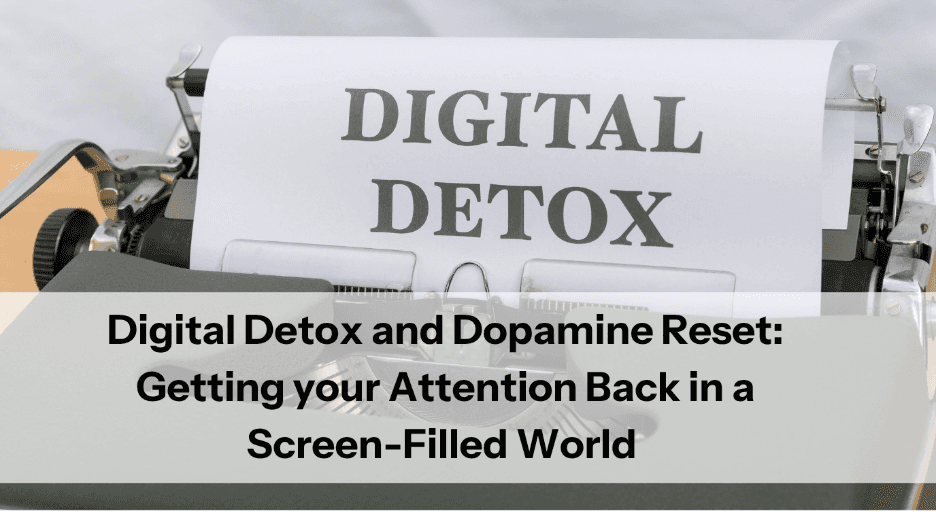
Screens are everywhere, like reality. From the moment we wake up to the moment we fall asleep, many of us are already leaning into phones, tablets, computers, and televisions. And sure, technology has made day to day life easier, also it helps us connect instantly across distances, but there’s a catch. This endless digital engagement seems to come with a price. Even while people are more electronically linked than ever, more folks are also reporting rising feelings of isolation and loneliness, which is kind of a weird paradox if you think about it.
The root is often the loss of steady, meaningful human contact, and that need is both biological and emotional, not just “nice to have”. Constant screen input can break up attention, throw off nervous system regulation, and basically dull our ability to stay in the moment. Increased research is pointing to something called a digital detox, which is basically taking intentional breaks from screens. The idea is that it can help restore balance by calming the brain’s reward circuitry and supporting overall well-being, sometimes paired with help like psychotherapy services in Connecticut .
How Screens Hijack Attention and the Nervous System
Most digital platforms are built to grab attention. Things like notifications, endless scrolling feeds and little social rewards kick dopamine into gear. That reinforcement trains the habit loop, so frequent checking and those short stimulation hits feel normal. Over time, the brain gets used to continual novelty, so staying with one thing, or tolerating stillness, or actually settling into deep engagement, starts to feel harder.
That constant attentional pull can keep the nervous system stuck in a low-level alert state. When attention gets chopped up repeatedly, the body can’t fully unwind, repair, or feel safe enough to connect. Even in social situations, a lot of people are “there” but not fully there, you know, eyes forward but thumbs moving, partially present, or multitasking during moments that used to be real connection. And even if it seems small, that steady wearing down of presence can add to emotional exhaustion, and a growing sense of being disconnected which may also be eased with mind-body options such as reiki energy healing in Connecticut.
Digital Detox as a way Back to Real Connection
A digital detox doesn’t mean removing technology completely. It’s not about punishment or deprivation. It’s more about reducing the default, habitual, non-essential screen use, so the nervous system can re-adjust. And unlike those extreme “dopamine fasting” trends, a more balanced dopamine reset helps the brain depend less on these artificial rewards and become more open to natural sources of pleasure and meaning. Often, people also pair that with holistic care like naturopathic care.
Real human connection matters here—things like eye contact, shared moments, physical presence, and co-regulation. These experiences help turn on calming pathways that screens can’t truly mimic. When digital stimulation drops, room opens up for attention, for presence, and for relational connection to come back, not in a forced way, but in a steadier way.
Why Nostalgia Is Everywhere Right Now?
Honestly it makes sense, nostalgia has come back kind of hard. A lot of people seem drawn to the music, the films, and even those restaurants that feel straight out of the 1980s and 1990s; not just because it “looks” nice, but because the whole setup gave you something more than vibes. Those places had a kind of character, the small habits felt shared, and the moments carried that sense of anticipation and weighty meaning. Now though, spaces keep getting more standardized, more commercial, and way more digitally mediated and somehow the sensory texture and emotional pull just isn't as strong. So, connection gets harder, even if you’re technically “out.”
And that kind of subtle change can create persistent low-grade anxiety. It’s like the nervous system is searching for grounding, familiar cues, and emotional nourishment, but can’t really lock onto it. What people usually want through nostalgia isn't actually “the past” like a museum trip. It’s the inner weather those experiences once triggered: belonging, energy, presence, and real human warmth. People are trying to feel something again, and it ends up feeling almost just beyond reach.
The Impact of COVID on Anxiety and Disconnection
This all got louder during the COVID-19 period. Long stretches of isolation, plus fear, uncertainty, and the constant disruption of everyday routines, really did a number on mental and emotional health. Human connection is one of the nervous system’s main regulators and then it was suddenly limited, or removed, depending on the situation.
Yes, technology has helped people stay in touch, but virtual contact often can’t fully replace the stabilizing effect of in-person connection. For many, the anxiety that hangs around today seems tied to ongoing digital overload, but also to something older and unresolved… a longing to feel safe, connected, and emotionally awake again. In that sense, approaches like hypnosis therapy near me may add some extra support.
What the Research Shows
More studies keep aligning with the idea that cutting back screen time helps. Researchers have found that even brief reductions in smartphone use can improve sustained attention and mental clarity. People often say they feel more here-in-the-moment, more focused, and more actively involved in daily life, not drifting.
Mental health trends look better, too. After digital detox style interventions, lower anxiety, less stress, and reduced emotional fatigue have been reported. You could say these gains partly come from stepping back into real-world activities and relationships, which naturally help regulate emotion and build psychological sturdiness. Sometimes this is even reinforced through functional medicine health coaching.
Sleep quality also tends to improve, especially if screen time drops in the evening. Better rest supports emotional steadiness, clearer thinking, and the capacity to connect in a meaningful way with other people, which again supports that feeling of safety and well-being.
Practical Ways to Reclaim Attention and Feeling
Digital detox practices are most effective when they are intentional and sustainable. Consider starting with small shifts:
Create screen-free times during meals or evenings
Keep phones out of bedrooms to support sleep and intimacy
Turn off non-essential notifications
Designate device-free spaces that invite conversation or rest
Replace scrolling with activities that foster presence, such as walking, creative expression, or time with others, or even supportive wellness practices like traditional Chinese medicine and colonic hydrotherapy. Even modest changes can create noticeable shifts in attention, emotional regulation, and connection.

Reclaiming Presence in a Screen-Filled World
Technology is a powerful tool, but it cannot replace the healing impact of real human connection. A digital detox is not about going backward, it is about restoring balance. By creating boundaries around screens and allowing the brain reward system to reset, we make space for attention, presence, and meaningful connection to return.
In a world designed for constant stimulation and sameness, choosing presence is an act of care. Reclaiming attention is not just about focus, it is about remembering how to feel alive, connected, and human again.
At the Center for Natural Medicine, we try to help you get back in touch with yourself, and your overall wellbeing. We do that using kind, evidence-based naturopathic approaches that feel more natural over time. If you want, reach out, and we’ll talk with you about how our services might support your path toward steadiness and being here now. Our work is multidisciplinary, so there’s more than one angle to your care.
References:
BMC Medicine. (2025). Smartphone screen time reduction improves mental health: A randomized controlled trial. https://bmcmedicine.biomedcentral.com/articles/10.1186/s12916-025-03944-z
Georgetown University. (2025). Digital detox reduces screen time and improves well-being, attention, and mental health. https://www.georgetown.edu/news/digital-detox-reduce-screen-time-benefits/
Science News Today. (2025). Digital detox: How taking a break from screens boosts your mental health. https://www.sciencenewstoday.org/digital-detox-how-taking-a-break-from-screens-boosts-your-mental-health
Frequently Asked Questions
1. What is a digital detox and how does it help?
A digital detox involves intentionally reducing screen time to give the brain and nervous system a break. It helps improve focus, reduce stress, and restore a sense of balance in daily life.
2. What is a dopamine reset?
A dopamine reset is a way of reducing overstimulation from constant digital input so the brain can become more responsive to natural, everyday sources of satisfaction like real conversations, movement, and rest.
3. How does too much screen time affect mental health?
Excessive screen use can increase anxiety, disrupt sleep, reduce attention span, and create a sense of disconnection. It can also keep the nervous system in a constant state of alertness.
4. How long should a digital detox last?
There’s no fixed rule. Even small changes, like screen-free evenings or limiting social media use for a few hours a day, can make a noticeable difference over time.
5. What are simple ways to start a digital detox?
You can begin by turning off notifications, setting screen-free zones, avoiding screens before bed, and replacing scrolling time with activities like walking, reading, or spending time with others.
Screens are everywhere, like reality. From the moment we wake up to the moment we fall asleep, many of us are already leaning into phones, tablets, computers, and televisions. And sure, technology has made day to day life easier, also it helps us connect instantly across distances, but there’s a catch. This endless digital engagement seems to come with a price. Even while people are more electronically linked than ever, more folks are also reporting rising feelings of isolation and loneliness, which is kind of a weird paradox if you think about it.
The root is often the loss of steady, meaningful human contact, and that need is both biological and emotional, not just “nice to have”. Constant screen input can break up attention, throw off nervous system regulation, and basically dull our ability to stay in the moment. Increased research is pointing to something called a digital detox, which is basically taking intentional breaks from screens. The idea is that it can help restore balance by calming the brain’s reward circuitry and supporting overall well-being, sometimes paired with help like psychotherapy services in Connecticut .
How Screens Hijack Attention and the Nervous System
Most digital platforms are built to grab attention. Things like notifications, endless scrolling feeds and little social rewards kick dopamine into gear. That reinforcement trains the habit loop, so frequent checking and those short stimulation hits feel normal. Over time, the brain gets used to continual novelty, so staying with one thing, or tolerating stillness, or actually settling into deep engagement, starts to feel harder.
That constant attentional pull can keep the nervous system stuck in a low-level alert state. When attention gets chopped up repeatedly, the body can’t fully unwind, repair, or feel safe enough to connect. Even in social situations, a lot of people are “there” but not fully there, you know, eyes forward but thumbs moving, partially present, or multitasking during moments that used to be real connection. And even if it seems small, that steady wearing down of presence can add to emotional exhaustion, and a growing sense of being disconnected which may also be eased with mind-body options such as reiki energy healing in Connecticut.
Digital Detox as a way Back to Real Connection
A digital detox doesn’t mean removing technology completely. It’s not about punishment or deprivation. It’s more about reducing the default, habitual, non-essential screen use, so the nervous system can re-adjust. And unlike those extreme “dopamine fasting” trends, a more balanced dopamine reset helps the brain depend less on these artificial rewards and become more open to natural sources of pleasure and meaning. Often, people also pair that with holistic care like naturopathic care.
Real human connection matters here—things like eye contact, shared moments, physical presence, and co-regulation. These experiences help turn on calming pathways that screens can’t truly mimic. When digital stimulation drops, room opens up for attention, for presence, and for relational connection to come back, not in a forced way, but in a steadier way.
Why Nostalgia Is Everywhere Right Now?
Honestly it makes sense, nostalgia has come back kind of hard. A lot of people seem drawn to the music, the films, and even those restaurants that feel straight out of the 1980s and 1990s; not just because it “looks” nice, but because the whole setup gave you something more than vibes. Those places had a kind of character, the small habits felt shared, and the moments carried that sense of anticipation and weighty meaning. Now though, spaces keep getting more standardized, more commercial, and way more digitally mediated and somehow the sensory texture and emotional pull just isn't as strong. So, connection gets harder, even if you’re technically “out.”
And that kind of subtle change can create persistent low-grade anxiety. It’s like the nervous system is searching for grounding, familiar cues, and emotional nourishment, but can’t really lock onto it. What people usually want through nostalgia isn't actually “the past” like a museum trip. It’s the inner weather those experiences once triggered: belonging, energy, presence, and real human warmth. People are trying to feel something again, and it ends up feeling almost just beyond reach.
The Impact of COVID on Anxiety and Disconnection
This all got louder during the COVID-19 period. Long stretches of isolation, plus fear, uncertainty, and the constant disruption of everyday routines, really did a number on mental and emotional health. Human connection is one of the nervous system’s main regulators and then it was suddenly limited, or removed, depending on the situation.
Yes, technology has helped people stay in touch, but virtual contact often can’t fully replace the stabilizing effect of in-person connection. For many, the anxiety that hangs around today seems tied to ongoing digital overload, but also to something older and unresolved… a longing to feel safe, connected, and emotionally awake again. In that sense, approaches like hypnosis therapy near me may add some extra support.
What the Research Shows
More studies keep aligning with the idea that cutting back screen time helps. Researchers have found that even brief reductions in smartphone use can improve sustained attention and mental clarity. People often say they feel more here-in-the-moment, more focused, and more actively involved in daily life, not drifting.
Mental health trends look better, too. After digital detox style interventions, lower anxiety, less stress, and reduced emotional fatigue have been reported. You could say these gains partly come from stepping back into real-world activities and relationships, which naturally help regulate emotion and build psychological sturdiness. Sometimes this is even reinforced through functional medicine health coaching.
Sleep quality also tends to improve, especially if screen time drops in the evening. Better rest supports emotional steadiness, clearer thinking, and the capacity to connect in a meaningful way with other people, which again supports that feeling of safety and well-being.
Practical Ways to Reclaim Attention and Feeling
Digital detox practices are most effective when they are intentional and sustainable. Consider starting with small shifts:
Create screen-free times during meals or evenings
Keep phones out of bedrooms to support sleep and intimacy
Turn off non-essential notifications
Designate device-free spaces that invite conversation or rest
Replace scrolling with activities that foster presence, such as walking, creative expression, or time with others, or even supportive wellness practices like traditional Chinese medicine and colonic hydrotherapy. Even modest changes can create noticeable shifts in attention, emotional regulation, and connection.
Reclaiming Presence in a Screen-Filled World
Technology is a powerful tool, but it cannot replace the healing impact of real human connection. A digital detox is not about going backward, it is about restoring balance. By creating boundaries around screens and allowing the brain reward system to reset, we make space for attention, presence, and meaningful connection to return.
In a world designed for constant stimulation and sameness, choosing presence is an act of care. Reclaiming attention is not just about focus, it is about remembering how to feel alive, connected, and human again.
At the Center for Natural Medicine, we try to help you get back in touch with yourself, and your overall wellbeing. We do that using kind, evidence-based naturopathic approaches that feel more natural over time. If you want, reach out, and we’ll talk with you about how our services might support your path toward steadiness and being here now. Our work is multidisciplinary, so there’s more than one angle to your care.
References:
BMC Medicine. (2025). Smartphone screen time reduction improves mental health: A randomized controlled trial. https://bmcmedicine.biomedcentral.com/articles/10.1186/s12916-025-03944-z
Georgetown University. (2025). Digital detox reduces screen time and improves well-being, attention, and mental health. https://www.georgetown.edu/news/digital-detox-reduce-screen-time-benefits/
Science News Today. (2025). Digital detox: How taking a break from screens boosts your mental health. https://www.sciencenewstoday.org/digital-detox-how-taking-a-break-from-screens-boosts-your-mental-health
Frequently Asked Questions
1. What is a digital detox and how does it help?
A digital detox involves intentionally reducing screen time to give the brain and nervous system a break. It helps improve focus, reduce stress, and restore a sense of balance in daily life.
2. What is a dopamine reset?
A dopamine reset is a way of reducing overstimulation from constant digital input so the brain can become more responsive to natural, everyday sources of satisfaction like real conversations, movement, and rest.
3. How does too much screen time affect mental health?
Excessive screen use can increase anxiety, disrupt sleep, reduce attention span, and create a sense of disconnection. It can also keep the nervous system in a constant state of alertness.
4. How long should a digital detox last?
There’s no fixed rule. Even small changes, like screen-free evenings or limiting social media use for a few hours a day, can make a noticeable difference over time.
5. What are simple ways to start a digital detox?
You can begin by turning off notifications, setting screen-free zones, avoiding screens before bed, and replacing scrolling time with activities like walking, reading, or spending time with others.
Latest Blogs

What Is Colonic Hydrotherapy? Procedure, Benefits, and Safety
Oct 17, 2026

What Conventional Medicine Gets Right and Functional Medicine Gets Right: A Fair Comparison
Oct 17, 2026

What Is a Holistic Health Practitioner? Roles, Benefits, and What to Expect
Oct 12, 2026

What Is Outpatient Mental Health Therapy? A Clear, Honest Breakdown
Aug 31, 2026

The 90-Day Wall: Why Most Wellness Plans Collapse by Month Three
Aug 6, 2026

Why More People Are Turning to a Functional Medicine Health Coach for Root-Cause Healing
Jul 14, 2026
Connect with us to begin your healing journey today.
Experience holistic healing that restores balance and vitality.

Connect with us to begin
your healing journey today.
Experience holistic healing that restores balance and vitality.
Connect with us to begin
your healing journey today.
Experience holistic healing that restores balance and vitality.
Connect with us to begin
your healing journey today.
Experience holistic healing that restores balance and vitality.
Latest New & Blogs
Related Blog Post
Related Blog Post
Newsletter Signup
Newsletter Signup
Newsletter Signup
Newsletter Signup
Get wellness tips, health insights, and exclusive updates in your inbox.
Get wellness tips, health insights, and exclusive updates in your inbox.
Get wellness tips, health insights, and exclusive updates in your inbox.
Get wellness tips, health insights, and exclusive updates in your inbox.