Table of Content
Title

Connect with
us to begin your healing journey today.
Experience holistic healing that restores balance and vitality.
Top 8 Tips for Shopping and Prepping Whole Foods
Top 8 Tips for Shopping and Prepping Whole Foods
Top 8 Tips for Shopping and Prepping Whole Foods
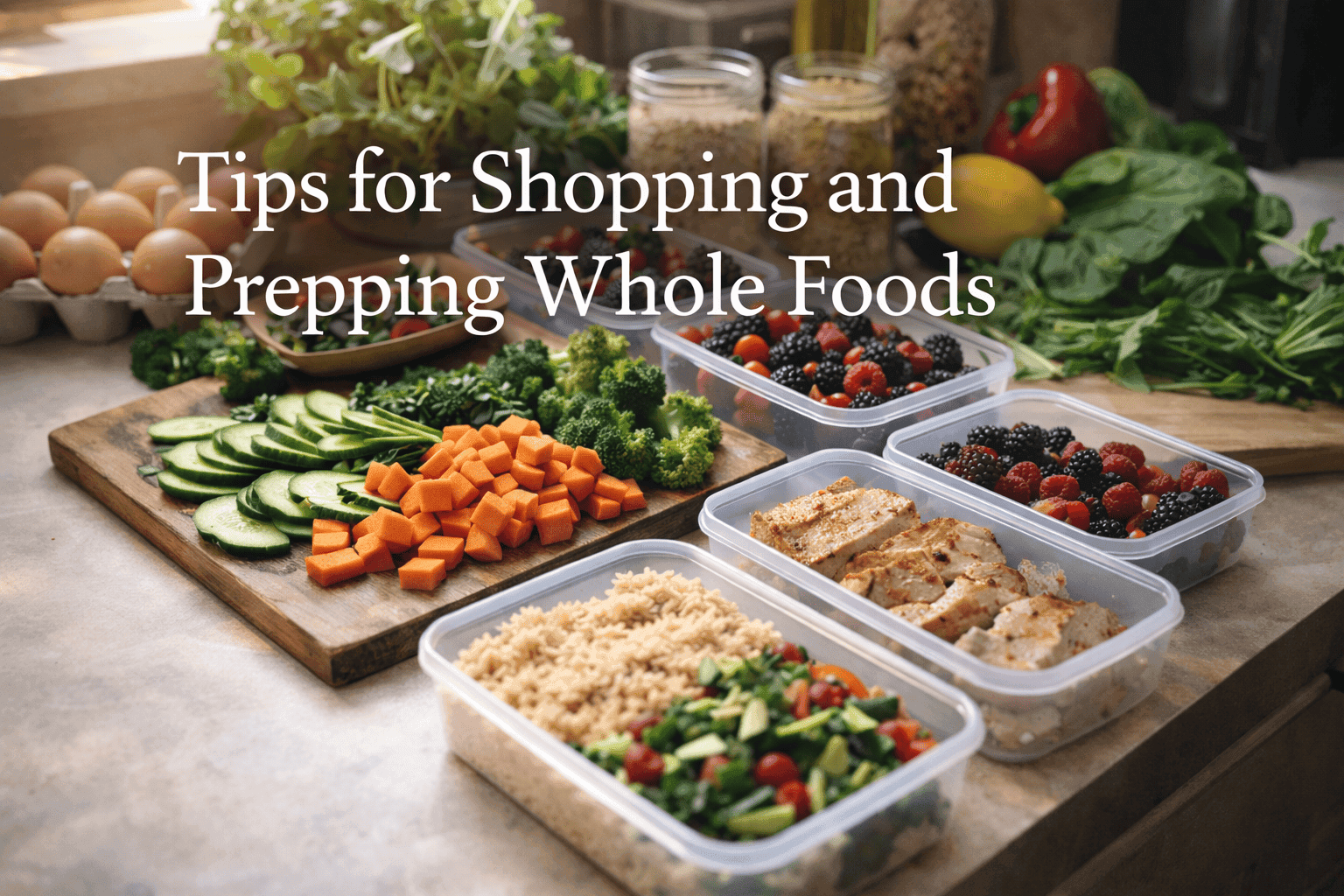
Making Whole-Food Eating Practical
If you’ve started choosing more whole foods, fresh produce, clean proteins, and minimally processed ingredients, you’ve already made one of the most powerful shifts for your health. But even with the best intentions, many people get stuck on the “how”: how to plan, shop affordably, and make it all work in a busy week. That’s where our Functional Medicine Health Coach at The Center for Natural Medicine at Watertown, Connecticut can help take the mystery and complexity out of it, guiding you step by step toward practical habits, smarter shopping, and realistic meal-prep strategies that make whole-food living simple and sustainable.
Planning Your Meals for Flexibility
It often helps to start by thinking about your meals in broad categories rather than strict recipes. Choosing a few items from each main group can make your week feel more manageable; focus on protein, vegetables, healthy fats, and complex carbohydrates. For instance, having a grilled chicken breast, roasted vegetables, and quinoa on hand can be the foundation for several different meals, from a hearty lunch bowl to a simple dinner plate. The flexibility of this approach allows you to experiment without feeling locked into a rigid menu.
Navigating the Grocery Store Efficiently
Once you’ve mapped out your categories, the grocery store can become a much less intimidating place. Thinking from the outside inward can make shopping faster and less overwhelming. Most whole foods, including produce, meat, seafood, eggs, and dairy, are found along the perimeter. Once those essentials are checked off your list, you can fill in the middle aisles with pantry staples like oats, rice, beans, or nuts. Approaching shopping in this way not only helps you focus on nutrient-dense foods, it also reduces the temptation to grab highly processed items on impulse. Many people are surprised at how much smoother their shopping trips feel when they follow this simple perimeter-first mindset.
Using Frozen Foods Strategically
Frozen fruits and vegetables are another game-changer for busy weeks. They can be just as nutritious as fresh ones, often more affordable, and allow you to avoid letting produce spoil before you can use it. Keeping a few staples, like berries for smoothies or spinach for stir-fries, ensures that you always have convenient, healthy options on hand. Freezing isn’t just for leftovers; it’s a smart strategy for making sure that real, nutrient-rich food is always available, no matter how hectic your schedule gets.
Simple Steps for Meal Prep
Meal prep doesn’t have to take over your weekends to be effective. Even small steps, like washing and portioning produce right after shopping, cooking extra dinner portions for lunch the next day, or batch-cooking proteins and grains, can save hours over the week. The little efforts add up, making it easier to assemble meals during the busy workweek. For many, the difference between a chaotic dinner hour and a calm, prepared evening comes down to just 20–30 minutes of prep right after grocery shopping.
Keeping Meals Flavorful and Enjoyable
Flavor is what keeps whole-food meals satisfying and enjoyable. Stocking your pantry with items such as olive oil, avocado oil, apple cider vinegar, coconut aminos, Bragg’s amino acids, and a variety of herbs and spices ensures that your meals are never boring. Simple homemade dressings made with lemon or lime juice and flax oil can elevate salads and roasted vegetables, keeping your meals interesting while staying within anti-inflammatory guidelines. When meals taste great, healthy eating feels effortless rather than restrictive.
Progress Over Perfection
It’s also important to remember that eating well isn’t about perfection; it’s about consistency. Aim for progress rather than all-or-nothing thinking. Even one homemade meal per day or a few balanced snacks can make a noticeable difference in your energy and digestion over time. Perhaps figuring out what to prepare for breakfast for yourself or your family poses the greatest challenge; start by coming up with 2–3 different whole-food options that can be rotated throughout the week and build from there. Each small, mindful choice reinforces the habits that lead to lasting results and helps you build confidence in the kitchen. Another helpful tip is to create a master whole-food grocery list as you discover what works for you and your family. Track new satisfying meals so you can repeat them weekly or biweekly, and during the week, check off items as you use them so you always know what needs to be replenished.
Personalized Support for Whole-Food Living
If you’d like more personalized support with meal planning, grocery strategies, or improving your nutrition for your specific health goals, our Functional Medicine Health Coach at The Center for Natural Medicine can help. Whole-food eating doesn’t have to feel confusing or complicated; that’s exactly where our health coach can step in, helping you take the mystery out of shopping, prepping, and eating for real nourishment. We’ll meet you where you are and create a practical, sustainable plan that fits your lifestyle so you can feel confident and empowered in your everyday choices.
References:
EatingWell. (2022, August 31). How to meal‑prep a week of healthy family dinners on Sunday. EatingWell. https://www.eatingwell.com/article/290751/how-to-meal-prep-a-week-of-healthy-family-dinners-on-sunday/ EatingWell
Healthline. (2019, November 8). 19 ways to eat healthy on a tight budget. Healthline. https://www.healthline.com/nutrition/19-ways-to-eat-healthy-on-a-budget Healthline
Kay Nutrition. (2022). How to eat well on a budget. Kay Nutrition. https://kaynutrition.com/how-to-eat-well-on-a-budget/ kaynutrition.com
Supporting Your Whole-Food Journey with Center For Natural Medicine
Making whole-food eating a long-term habit can feel overwhelming, especially when you’re juggling busy schedules, health concerns, or conflicting nutrition advice. This is where personalized guidance can make all the difference.
At Center For Natural Medicine, our team takes a functional and holistic approach to nutrition and wellness. Rather than offering one-size-fits-all plans, we help you understand how food impacts your unique body, health goals, and lifestyle. Whether you’re working toward better digestion, hormone balance, energy levels, or overall wellness, whole-food nutrition is often a key foundation of care.
Our functional medicine health coaches and providers work with you to:
Build realistic, sustainable whole-food meal plans
Simplify grocery shopping and meal prep
Identify foods that best support your specific health needs
Create habits that fit your daily life — not the other way around
If you’re ready to move beyond guesswork and want expert support on your whole-food journey, explore our nutrition and functional medicine services at Center For Natural Medicine to see how personalized care can help you feel your best.
FAQs:
What are whole foods, and why are they important?
Whole foods are minimally processed ingredients such as fresh fruits, vegetables, whole grains, legumes, nuts, seeds, and clean proteins. They are rich in nutrients and support long-term health, energy, and overall wellness.
How can I start eating more whole foods on a budget?
Focus on seasonal produce, buy in bulk, use frozen fruits and vegetables, plan meals around sales, and build meals from simple staple ingredients like beans, rice, and eggs.
What are some easy whole-food meal prep ideas for beginners?
Start by washing and chopping vegetables, cooking a batch of grains, roasting a tray of vegetables, and preparing one protein source. Mix and match throughout the week for flexible meals.
How do I stay consistent with whole-food eating?
Aim for progress over perfection. Plan loosely by meal categories, keep simple staples on hand, schedule a weekly grocery check-in, and prepare small components in advance to make healthy choices easier.
Making Whole-Food Eating Practical
If you’ve started choosing more whole foods, fresh produce, clean proteins, and minimally processed ingredients, you’ve already made one of the most powerful shifts for your health. But even with the best intentions, many people get stuck on the “how”: how to plan, shop affordably, and make it all work in a busy week. That’s where our Functional Medicine Health Coach at The Center for Natural Medicine at Watertown, Connecticut can help take the mystery and complexity out of it, guiding you step by step toward practical habits, smarter shopping, and realistic meal-prep strategies that make whole-food living simple and sustainable.
Planning Your Meals for Flexibility
It often helps to start by thinking about your meals in broad categories rather than strict recipes. Choosing a few items from each main group can make your week feel more manageable; focus on protein, vegetables, healthy fats, and complex carbohydrates. For instance, having a grilled chicken breast, roasted vegetables, and quinoa on hand can be the foundation for several different meals, from a hearty lunch bowl to a simple dinner plate. The flexibility of this approach allows you to experiment without feeling locked into a rigid menu.
Navigating the Grocery Store Efficiently
Once you’ve mapped out your categories, the grocery store can become a much less intimidating place. Thinking from the outside inward can make shopping faster and less overwhelming. Most whole foods, including produce, meat, seafood, eggs, and dairy, are found along the perimeter. Once those essentials are checked off your list, you can fill in the middle aisles with pantry staples like oats, rice, beans, or nuts. Approaching shopping in this way not only helps you focus on nutrient-dense foods, it also reduces the temptation to grab highly processed items on impulse. Many people are surprised at how much smoother their shopping trips feel when they follow this simple perimeter-first mindset.
Using Frozen Foods Strategically
Frozen fruits and vegetables are another game-changer for busy weeks. They can be just as nutritious as fresh ones, often more affordable, and allow you to avoid letting produce spoil before you can use it. Keeping a few staples, like berries for smoothies or spinach for stir-fries, ensures that you always have convenient, healthy options on hand. Freezing isn’t just for leftovers; it’s a smart strategy for making sure that real, nutrient-rich food is always available, no matter how hectic your schedule gets.
Simple Steps for Meal Prep
Meal prep doesn’t have to take over your weekends to be effective. Even small steps, like washing and portioning produce right after shopping, cooking extra dinner portions for lunch the next day, or batch-cooking proteins and grains, can save hours over the week. The little efforts add up, making it easier to assemble meals during the busy workweek. For many, the difference between a chaotic dinner hour and a calm, prepared evening comes down to just 20–30 minutes of prep right after grocery shopping.
Keeping Meals Flavorful and Enjoyable
Flavor is what keeps whole-food meals satisfying and enjoyable. Stocking your pantry with items such as olive oil, avocado oil, apple cider vinegar, coconut aminos, Bragg’s amino acids, and a variety of herbs and spices ensures that your meals are never boring. Simple homemade dressings made with lemon or lime juice and flax oil can elevate salads and roasted vegetables, keeping your meals interesting while staying within anti-inflammatory guidelines. When meals taste great, healthy eating feels effortless rather than restrictive.
Progress Over Perfection
It’s also important to remember that eating well isn’t about perfection; it’s about consistency. Aim for progress rather than all-or-nothing thinking. Even one homemade meal per day or a few balanced snacks can make a noticeable difference in your energy and digestion over time. Perhaps figuring out what to prepare for breakfast for yourself or your family poses the greatest challenge; start by coming up with 2–3 different whole-food options that can be rotated throughout the week and build from there. Each small, mindful choice reinforces the habits that lead to lasting results and helps you build confidence in the kitchen. Another helpful tip is to create a master whole-food grocery list as you discover what works for you and your family. Track new satisfying meals so you can repeat them weekly or biweekly, and during the week, check off items as you use them so you always know what needs to be replenished.
Personalized Support for Whole-Food Living
If you’d like more personalized support with meal planning, grocery strategies, or improving your nutrition for your specific health goals, our Functional Medicine Health Coach at The Center for Natural Medicine can help. Whole-food eating doesn’t have to feel confusing or complicated; that’s exactly where our health coach can step in, helping you take the mystery out of shopping, prepping, and eating for real nourishment. We’ll meet you where you are and create a practical, sustainable plan that fits your lifestyle so you can feel confident and empowered in your everyday choices.
References:
EatingWell. (2022, August 31). How to meal‑prep a week of healthy family dinners on Sunday. EatingWell. https://www.eatingwell.com/article/290751/how-to-meal-prep-a-week-of-healthy-family-dinners-on-sunday/ EatingWell
Healthline. (2019, November 8). 19 ways to eat healthy on a tight budget. Healthline. https://www.healthline.com/nutrition/19-ways-to-eat-healthy-on-a-budget Healthline
Kay Nutrition. (2022). How to eat well on a budget. Kay Nutrition. https://kaynutrition.com/how-to-eat-well-on-a-budget/ kaynutrition.com
Supporting Your Whole-Food Journey with Center For Natural Medicine
Making whole-food eating a long-term habit can feel overwhelming, especially when you’re juggling busy schedules, health concerns, or conflicting nutrition advice. This is where personalized guidance can make all the difference.
At Center For Natural Medicine, our team takes a functional and holistic approach to nutrition and wellness. Rather than offering one-size-fits-all plans, we help you understand how food impacts your unique body, health goals, and lifestyle. Whether you’re working toward better digestion, hormone balance, energy levels, or overall wellness, whole-food nutrition is often a key foundation of care.
Our functional medicine health coaches and providers work with you to:
Build realistic, sustainable whole-food meal plans
Simplify grocery shopping and meal prep
Identify foods that best support your specific health needs
Create habits that fit your daily life — not the other way around
If you’re ready to move beyond guesswork and want expert support on your whole-food journey, explore our nutrition and functional medicine services at Center For Natural Medicine to see how personalized care can help you feel your best.
FAQs:
What are whole foods, and why are they important?
Whole foods are minimally processed ingredients such as fresh fruits, vegetables, whole grains, legumes, nuts, seeds, and clean proteins. They are rich in nutrients and support long-term health, energy, and overall wellness.
How can I start eating more whole foods on a budget?
Focus on seasonal produce, buy in bulk, use frozen fruits and vegetables, plan meals around sales, and build meals from simple staple ingredients like beans, rice, and eggs.
What are some easy whole-food meal prep ideas for beginners?
Start by washing and chopping vegetables, cooking a batch of grains, roasting a tray of vegetables, and preparing one protein source. Mix and match throughout the week for flexible meals.
How do I stay consistent with whole-food eating?
Aim for progress over perfection. Plan loosely by meal categories, keep simple staples on hand, schedule a weekly grocery check-in, and prepare small components in advance to make healthy choices easier.
Latest Blogs

What Is a Holistic Health Practitioner? Roles, Benefits, and What to Expect
Oct 12, 2026

What Is Outpatient Mental Health Therapy? A Clear, Honest Breakdown
Aug 31, 2026

The 90-Day Wall: Why Most Wellness Plans Collapse by Month Three
Aug 6, 2026

Why More People Are Turning to a Functional Medicine Health Coach for Root-Cause Healing
Jul 14, 2026
Navigating the Healthcare System: Finding the Right Approach
Jun 27, 2026

Eating Closer to Nature: 5 Benefits of Choosing a Whole Foods Diet
Jun 19, 2026
Connect with us to begin your healing journey today.
Experience holistic healing that restores balance and vitality.

Connect with us to begin
your healing journey today.
Experience holistic healing that restores balance and vitality.
Connect with us to begin
your healing journey today.
Experience holistic healing that restores balance and vitality.
Connect with us to begin
your healing journey today.
Experience holistic healing that restores balance and vitality.
Latest New & Blogs
Related Blog Post
Related Blog Post
Newsletter Signup
Newsletter Signup
Newsletter Signup
Newsletter Signup
Get wellness tips, health insights, and exclusive updates in your inbox.
Get wellness tips, health insights, and exclusive updates in your inbox.
Get wellness tips, health insights, and exclusive updates in your inbox.
Get wellness tips, health insights, and exclusive updates in your inbox.