Table of Content
Title

Connect with
us to begin your healing journey today.
Experience holistic healing that restores balance and vitality.
Can’t Stop Thinking? Simple Meditation for Busy Minds
Can’t Stop Thinking? Simple Meditation for Busy Minds
Can’t Stop Thinking? Simple Meditation for Busy Minds
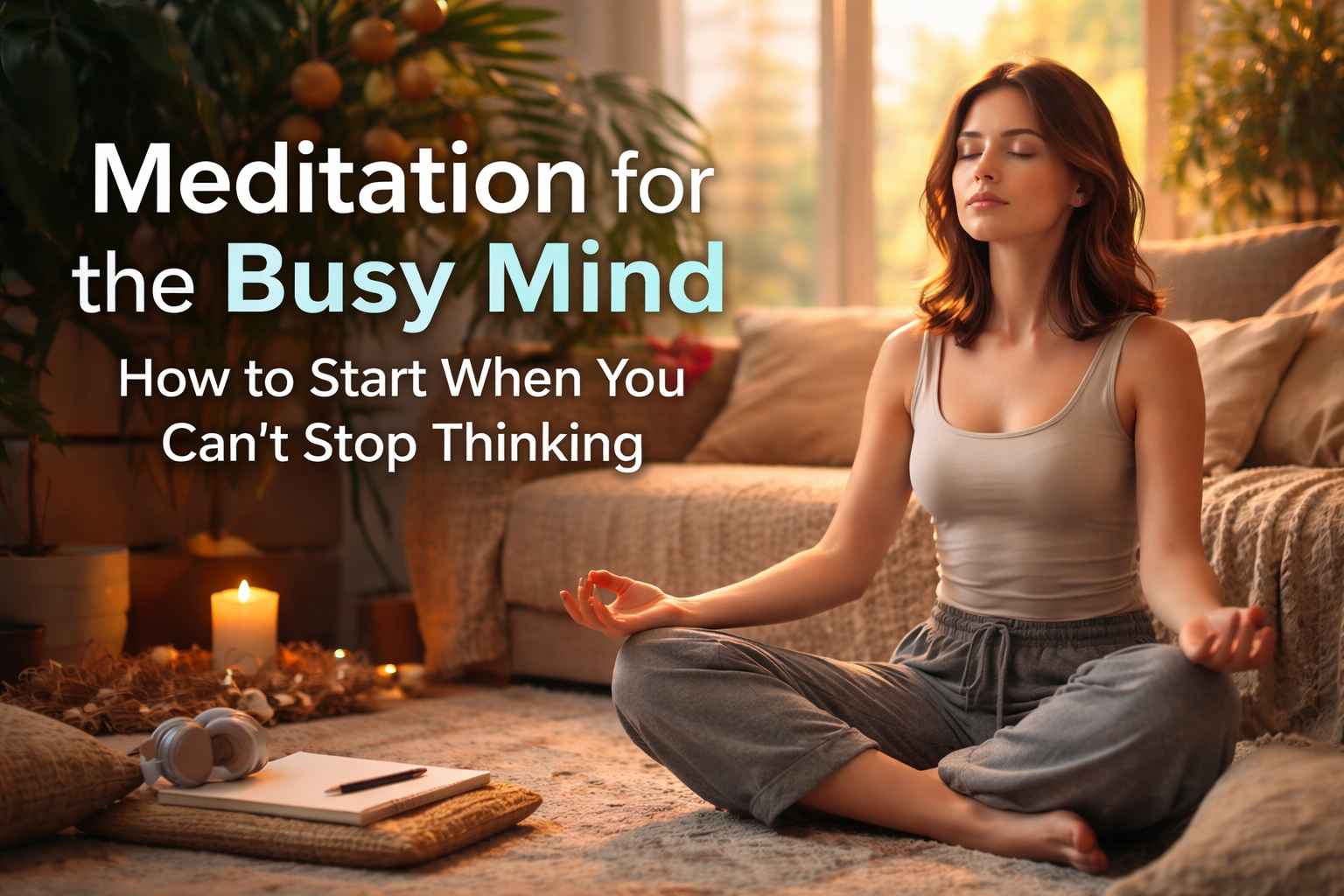
Meditation for the Busy Mind isn’t about stopping thoughts; it’s about learning to relate to them. If overthinking keeps you restless, this guide shows simple, practical ways to begin meditation, calm mental noise, and build focus even with a constantly active mind.
Reframing Meditation
If you think meditation means sitting perfectly still, eyes closed, mind blank, you’re not alone. That misconception is everywhere. The truth is that meditation isn’t about stopping your thoughts; it’s about engaging your attention in a gentle, intentional way. For many people, that means starting wherever you are, not where you think you should be.
For someone with a busy mind, racing thoughts, never-ending to-do lists, and the general stressors of life clamoring for attention, traditional stillness can almost feel impossible. So instead of “quieting your mind,” let’s explore practical, approachable ways to calm it, especially for people who feel intimidated by the word meditation.
A Grounding Practice That Truly Works
One of the most helpful approaches for people who feel like they just can’t stop thinking is a sensory grounding practice. This isn’t about forcing silence in your head; it’s about tuning into your body and your environment to bring your attention back to the present moment.
A simple sensory practice can look like this:
Soft gaze or open eyes: instead of closing your eyes, let your gaze rest gently on something nearby; just notice the colors, forms, and shapes.
Listening to ambient sounds: notice the sound of traffic outside, birdsong, the hum of your computer, or even the sound of silence.
Feeling physical sensations: pay attention to how your body feels; your feet on the floor, the chair beneath you, the rise and fall of your breath.
This kind of attention-shifting can help busy minds stay anchored without trying to “stop thinking” altogether. Instead of wrestling with your thoughts, you’re simply bringing your awareness back to your senses. You can practice this anywhere and anytime, especially when it feels difficult to concentrate or focus.
Try Mindful Movement: Meditation in Motion
If sitting still feels stressful or unnatural, you’re not doing it wrong, you just need a different doorway in. One powerful alternative is walking meditation. Movement helps regulate your nervous system, release stored emotional energy, and can shift you out of the fight or flight state to facilitate a state of calm and relaxation naturally.
Walking meditation combines movement and awareness. It might sound too simple to be meaningful, but the key to its effectiveness is that you anchor your attention into what your body is doing while it moves. Instead of attending to the thoughts circling around in your mind, you pay attention to:
the feeling of your feet contacting the ground
the rhythm of your steps
the way your breath naturally rises and falls with each stride
This can feel more natural for busy minds because you’re actively engaged, but in a calm, non-judgmental way. By regulating your nervous system in this way, you allow the body and mind to work together rather than feeling like a battle.
Sound as an Anchor: Meditation with Music or Sound Baths
Not all meditation needs to be silent or still. For some people, sound is the perfect anchor. Whether it’s gentle music, soundscapes, or a sound bath, immersing yourself in soothing sounds can guide your attention back to the present moment without pressure.
A sound bath is an experience where you lie or sit comfortably while being “bathed” in sound, often from gongs, singing bowls, chimes, and other instruments. These sounds wash over you and can induce a state of deep relaxation and calm attention. The focus is not on clearing your mind of all thoughts; it’s just about listening.
The soothing sounds encourage the mind to relax, release, and let go. Benefits may include deep relaxation, a greater sense of well-being, and support for physical healing through frequency and vibration. It can be especially helpful for those who struggle with traditional meditation due to overthinking or racing thoughts as you aren’t forcing your mind to go quiet; you’resimply tuning in.
Meditation Isn’t One-Size-Fits-All
It’s important to understand that if one form of meditation doesn’t work for you, it doesn’t mean you’re bad at meditation. It might just mean that your nervous system needs something different.
Some people find traditional meditation calming. Others find it frustrating. In fact, many experience greater anxiety or discomfort when asked to sit still and tune inward. That doesn’t mean meditation has failed you; it means your nervous system has something to tell you about what you need.
The body naturally shifts between states of calm and protection depending on how safe it feels. When the nervous system is under stress, pain, or past trauma, sitting still and turning inward can amplify discomfort rather than ease it. In these moments, the body isn’t resisting healing; it’s protecting you. Regulation doesn’t always begin with stillness; sometimes it starts with meeting the nervous system where it is.
The key is to explore a practice that feels supportive and to notice how it affects your body and mind.
If the answer is yes, that’s meditation. Mindfulness and meditation can be active, auditory, tactile, or movement based.
A Few Accessible Practices to Try Today
Here are quick ideas to explore:
Sensory grounding: noticing sights, sounds, and physical sensations around you
Walking awareness: slowing your pace and noticing your steps
Sound meditation: listening to calming music or nature sounds
Sound bath experiences: live or recorded sessions that use soothing tones and vibration
Creative focus: colouring, journaling, or other hands-on activities done with intention and awareness
These practices all engage attention gently, without pressure or expectation. Any practice that offers your nervous system even a little more ease is meaningful and beneficial.
Final Thoughts: Meditation On Your Terms
Meditation doesn’t have to feel intimidating or unreachable. For a busy mind, it’s not about silencing thoughts; it’s about learning how to relate to them differently by anchoring your attention to sensation, sound, or movement.
Whether you close your eyes and breathe, listen to soothing sounds, or mindfully walk outside, what matters most is that the practice supports you, not stresses you out.
If you’re curious to go deeper and would like personalized guidance to learn basic skills for relaxing the body, calming the nervous system, and building mindfulness into daily life, our hypnotherapist at The Center for Natural Medicine is here to help. Reach out today to learn how hypnosis can gently teach your body and mind how to settle, reset, and feel more at ease — even when life feels busy.
FAQs:
How long does it take to notice benefits from meditation if I have a busy or overthinking mind?
Answer: Some people notice subtle changes like improved awareness or emotional regulation within a few sessions, while deeper benefits often develop with consistent practice over weeks rather than days.
Can meditation help with anxiety caused by constant overthinking?
Answer: Meditation can support anxiety management by improving nervous system regulation and self-awareness, but it works best as part of a broader wellness or therapeutic approach rather than a quick fix.
Do I need guidance from a professional to start meditation?
Answer: While self-guided meditation is effective for many, professional guidance can be helpful if you feel stuck, overwhelmed, or want personalized techniques suited to your mental and emotional patterns.
Is meditation suitable for people who have experienced stress or emotional trauma?
Answer: Yes, but the approach matters. Trauma-informed or guided meditation methods are often recommended to ensure the practice feels safe, supportive, and grounding rather than overwhelming.
References:
Mindful.org. (2021, June 1). A grounding practice to focus your busy mind. https://www.mindful.org/a-grounding-practice-to-focus-your-busy-mind/
One Peak Medical. (2025). Why meditation isn’t one-size-fits-all and what to try instead.
Verywell Mind. (2023). What are sound baths? https://www.verywellmind.com/what-are-sound-baths-4783501
Meditation for the Busy Mind isn’t about stopping thoughts; it’s about learning to relate to them. If overthinking keeps you restless, this guide shows simple, practical ways to begin meditation, calm mental noise, and build focus even with a constantly active mind.
Reframing Meditation
If you think meditation means sitting perfectly still, eyes closed, mind blank, you’re not alone. That misconception is everywhere. The truth is that meditation isn’t about stopping your thoughts; it’s about engaging your attention in a gentle, intentional way. For many people, that means starting wherever you are, not where you think you should be.
For someone with a busy mind, racing thoughts, never-ending to-do lists, and the general stressors of life clamoring for attention, traditional stillness can almost feel impossible. So instead of “quieting your mind,” let’s explore practical, approachable ways to calm it, especially for people who feel intimidated by the word meditation.
A Grounding Practice That Truly Works
One of the most helpful approaches for people who feel like they just can’t stop thinking is a sensory grounding practice. This isn’t about forcing silence in your head; it’s about tuning into your body and your environment to bring your attention back to the present moment.
A simple sensory practice can look like this:
Soft gaze or open eyes: instead of closing your eyes, let your gaze rest gently on something nearby; just notice the colors, forms, and shapes.
Listening to ambient sounds: notice the sound of traffic outside, birdsong, the hum of your computer, or even the sound of silence.
Feeling physical sensations: pay attention to how your body feels; your feet on the floor, the chair beneath you, the rise and fall of your breath.
This kind of attention-shifting can help busy minds stay anchored without trying to “stop thinking” altogether. Instead of wrestling with your thoughts, you’re simply bringing your awareness back to your senses. You can practice this anywhere and anytime, especially when it feels difficult to concentrate or focus.
Try Mindful Movement: Meditation in Motion
If sitting still feels stressful or unnatural, you’re not doing it wrong, you just need a different doorway in. One powerful alternative is walking meditation. Movement helps regulate your nervous system, release stored emotional energy, and can shift you out of the fight or flight state to facilitate a state of calm and relaxation naturally.
Walking meditation combines movement and awareness. It might sound too simple to be meaningful, but the key to its effectiveness is that you anchor your attention into what your body is doing while it moves. Instead of attending to the thoughts circling around in your mind, you pay attention to:
the feeling of your feet contacting the ground
the rhythm of your steps
the way your breath naturally rises and falls with each stride
This can feel more natural for busy minds because you’re actively engaged, but in a calm, non-judgmental way. By regulating your nervous system in this way, you allow the body and mind to work together rather than feeling like a battle.
Sound as an Anchor: Meditation with Music or Sound Baths
Not all meditation needs to be silent or still. For some people, sound is the perfect anchor. Whether it’s gentle music, soundscapes, or a sound bath, immersing yourself in soothing sounds can guide your attention back to the present moment without pressure.
A sound bath is an experience where you lie or sit comfortably while being “bathed” in sound, often from gongs, singing bowls, chimes, and other instruments. These sounds wash over you and can induce a state of deep relaxation and calm attention. The focus is not on clearing your mind of all thoughts; it’s just about listening.
The soothing sounds encourage the mind to relax, release, and let go. Benefits may include deep relaxation, a greater sense of well-being, and support for physical healing through frequency and vibration. It can be especially helpful for those who struggle with traditional meditation due to overthinking or racing thoughts as you aren’t forcing your mind to go quiet; you’resimply tuning in.
Meditation Isn’t One-Size-Fits-All
It’s important to understand that if one form of meditation doesn’t work for you, it doesn’t mean you’re bad at meditation. It might just mean that your nervous system needs something different.
Some people find traditional meditation calming. Others find it frustrating. In fact, many experience greater anxiety or discomfort when asked to sit still and tune inward. That doesn’t mean meditation has failed you; it means your nervous system has something to tell you about what you need.
The body naturally shifts between states of calm and protection depending on how safe it feels. When the nervous system is under stress, pain, or past trauma, sitting still and turning inward can amplify discomfort rather than ease it. In these moments, the body isn’t resisting healing; it’s protecting you. Regulation doesn’t always begin with stillness; sometimes it starts with meeting the nervous system where it is.
The key is to explore a practice that feels supportive and to notice how it affects your body and mind.
If the answer is yes, that’s meditation. Mindfulness and meditation can be active, auditory, tactile, or movement based.
A Few Accessible Practices to Try Today
Here are quick ideas to explore:
Sensory grounding: noticing sights, sounds, and physical sensations around you
Walking awareness: slowing your pace and noticing your steps
Sound meditation: listening to calming music or nature sounds
Sound bath experiences: live or recorded sessions that use soothing tones and vibration
Creative focus: colouring, journaling, or other hands-on activities done with intention and awareness
These practices all engage attention gently, without pressure or expectation. Any practice that offers your nervous system even a little more ease is meaningful and beneficial.
Final Thoughts: Meditation On Your Terms
Meditation doesn’t have to feel intimidating or unreachable. For a busy mind, it’s not about silencing thoughts; it’s about learning how to relate to them differently by anchoring your attention to sensation, sound, or movement.
Whether you close your eyes and breathe, listen to soothing sounds, or mindfully walk outside, what matters most is that the practice supports you, not stresses you out.
If you’re curious to go deeper and would like personalized guidance to learn basic skills for relaxing the body, calming the nervous system, and building mindfulness into daily life, our hypnotherapist at The Center for Natural Medicine is here to help. Reach out today to learn how hypnosis can gently teach your body and mind how to settle, reset, and feel more at ease — even when life feels busy.
FAQs:
How long does it take to notice benefits from meditation if I have a busy or overthinking mind?
Answer: Some people notice subtle changes like improved awareness or emotional regulation within a few sessions, while deeper benefits often develop with consistent practice over weeks rather than days.
Can meditation help with anxiety caused by constant overthinking?
Answer: Meditation can support anxiety management by improving nervous system regulation and self-awareness, but it works best as part of a broader wellness or therapeutic approach rather than a quick fix.
Do I need guidance from a professional to start meditation?
Answer: While self-guided meditation is effective for many, professional guidance can be helpful if you feel stuck, overwhelmed, or want personalized techniques suited to your mental and emotional patterns.
Is meditation suitable for people who have experienced stress or emotional trauma?
Answer: Yes, but the approach matters. Trauma-informed or guided meditation methods are often recommended to ensure the practice feels safe, supportive, and grounding rather than overwhelming.
References:
Mindful.org. (2021, June 1). A grounding practice to focus your busy mind. https://www.mindful.org/a-grounding-practice-to-focus-your-busy-mind/
One Peak Medical. (2025). Why meditation isn’t one-size-fits-all and what to try instead.
Verywell Mind. (2023). What are sound baths? https://www.verywellmind.com/what-are-sound-baths-4783501
Latest Blogs

What Is Colonic Hydrotherapy? Procedure, Benefits, and Safety
Oct 17, 2026

What Conventional Medicine Gets Right and Functional Medicine Gets Right: A Fair Comparison
Oct 17, 2026

What Is a Holistic Health Practitioner? Roles, Benefits, and What to Expect
Oct 12, 2026

What Is Outpatient Mental Health Therapy? A Clear, Honest Breakdown
Aug 31, 2026

The 90-Day Wall: Why Most Wellness Plans Collapse by Month Three
Aug 6, 2026

Why More People Are Turning to a Functional Medicine Health Coach for Root-Cause Healing
Jul 14, 2026
Connect with us to begin your healing journey today.
Experience holistic healing that restores balance and vitality.

Connect with us to begin
your healing journey today.
Experience holistic healing that restores balance and vitality.
Connect with us to begin
your healing journey today.
Experience holistic healing that restores balance and vitality.
Connect with us to begin
your healing journey today.
Experience holistic healing that restores balance and vitality.
Latest New & Blogs
Related Blog Post
Related Blog Post
Newsletter Signup
Newsletter Signup
Newsletter Signup
Newsletter Signup
Get wellness tips, health insights, and exclusive updates in your inbox.
Get wellness tips, health insights, and exclusive updates in your inbox.
Get wellness tips, health insights, and exclusive updates in your inbox.
Get wellness tips, health insights, and exclusive updates in your inbox.